Does an MRI Help Prove a Car Accident Injury Claim?
Yes. An MRI can be powerful evidence in a car accident injury claim, especially when it identifies a herniated disc, nerve compression, ligament injury, spinal cord problem, or another abnormality that may not appear on an X-ray.
But an MRI does not automatically prove that a car accident caused the injury.
That distinction matters.
An MRI can show what is happening inside your body. Your medical history, symptoms, examinations, treatment records, prior imaging, and medical opinions help establish why it is happening and whether the collision caused or aggravated the condition.
At Perez Law Group, PLLC, we believe an MRI should be viewed as one piece of a larger medical timeline. In a strong injury claim, the imaging should make sense when compared with what happened in the crash, when the symptoms began, what doctors observed, and how the injury has affected the person’s life.
If you were injured in an Arizona collision, our Glendale car accident attorneys can review the medical and insurance evidence involved in your claim. Call Perez Law Group at (602) 730-7100 for a consultation. Hablamos Español.
What Can an MRI Show After a Car Accident?
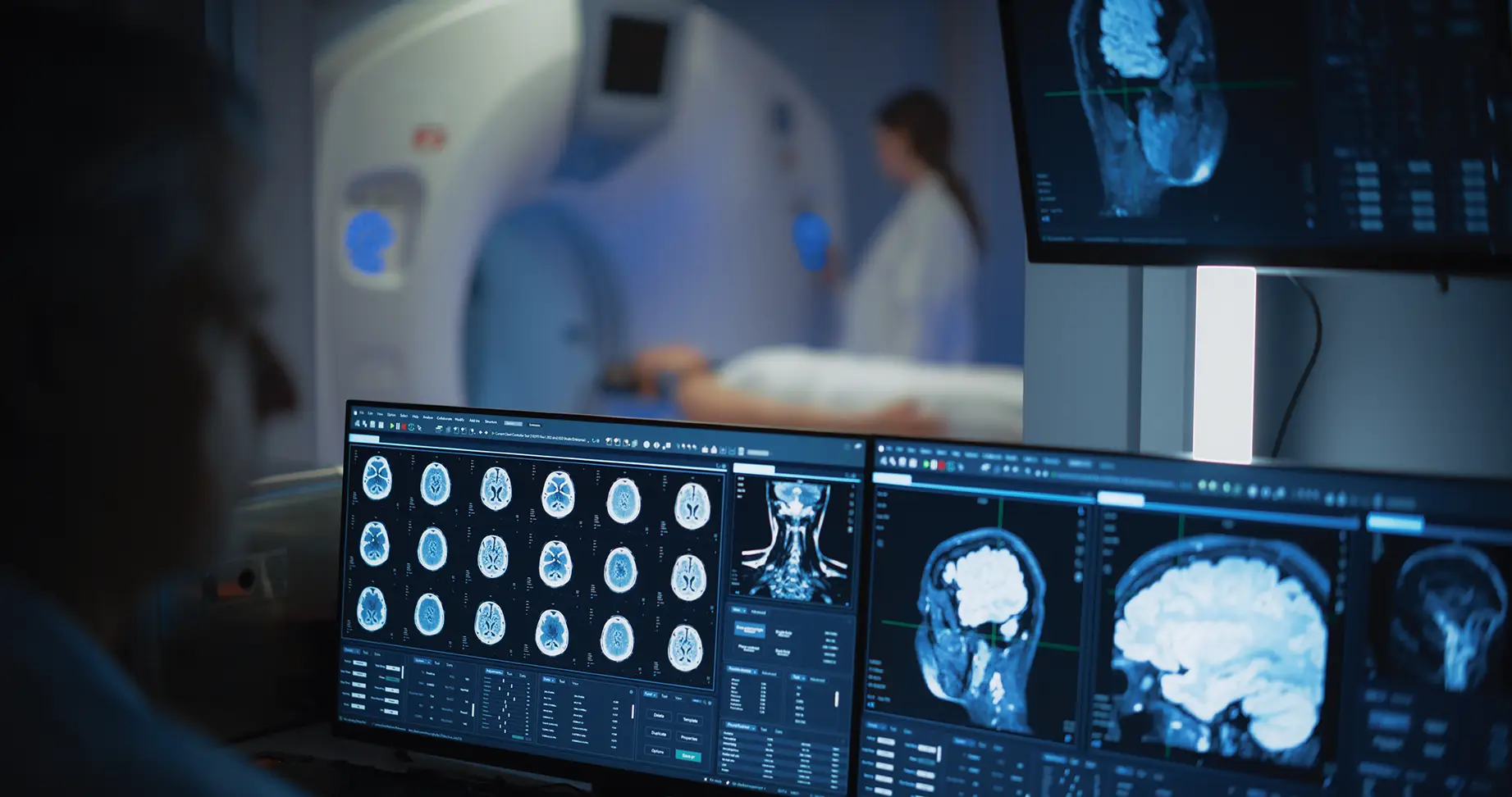
Magnetic resonance imaging, commonly called MRI, produces detailed images using a magnetic field, radio waves, and a computer.
MRI is particularly useful for looking at soft tissues. According to the U.S. Food and Drug Administration, MRI provides better soft-tissue contrast than CT imaging and can distinguish among tissues such as muscle, fat, and water. MRI also does not use ionizing radiation. FDA information about MRI benefits and risks
For someone experiencing neck or back problems after a collision, an MRI may identify conditions such as:
- Herniated or protruding discs
- Disc degeneration
- Spinal cord abnormalities
- Nerve compression or inflammation
- Ligament injuries
- Certain fractures or bone abnormalities
- Other soft-tissue injuries
RadiologyInfo, a patient education resource from the American College of Radiology and Radiological Society of North America, describes MRI as the most sensitive imaging test currently available for examining the spine. It can be used to evaluate traumatic injuries involving bone, discs, ligaments, the spinal cord, and nerves. RadiologyInfo guide to spine MRI
That can make MRI especially important when someone continues experiencing symptoms after other tests have not explained the problem.
Why Might an MRI Help an Injury Claim?
Pain is real, but pain cannot be photographed.
That creates one of the challenges in a personal injury case. An insurance adjuster cannot physically see a person’s neck pain, burning sensation, weakness, or difficulty sleeping.
An MRI can sometimes provide objective medical findings that correspond with those symptoms.
Imagine that someone develops neck pain and tingling down an arm after being rear-ended. The symptoms continue despite conservative treatment. An MRI later identifies a cervical disc herniation affecting a nerve.
That does not end the causation analysis, but now there is something more than the patient’s description of pain. There is an identifiable structural abnormality that doctors can evaluate alongside the symptoms and physical examination.
This is particularly important when insurers try to characterize an accident as minor because the vehicles did not sustain extensive damage. As we explain in our article about little vehicle damage and serious injuries, property damage is evidence of the collision. It is not a medical diagnosis.
An MRI Does Not Put a Date on an Injury
This is where many discussions about MRI evidence become too simplistic.
An MRI can show a disc bulge, herniation, degeneration, or another abnormality. It may not be able to tell you exactly when that condition developed.
That gives insurance companies room to argue.
For example, an insurer might acknowledge that an MRI shows a herniated disc but claim the condition existed before the collision. The adjuster may point to terms such as “degenerative changes,” “chronic,” or “disc desiccation” in the radiology report.
This is not an unusual issue.
A systematic review published in the American Journal of Neuroradiology examined imaging findings in 3,110 people without symptoms. Researchers found that degenerative findings became increasingly common with age. The study concluded that many degenerative imaging findings may be part of normal aging and must be interpreted in the context of the patient’s clinical condition. Read the study through the National Library of Medicine
That cuts both ways.
An insurance company cannot reasonably point to the word “degenerative” and assume that it explains every symptom. At the same time, the presence of an abnormality on MRI does not automatically mean the crash caused it.
The real question is what changed after the accident?
What If the MRI Shows a Pre-Existing or Degenerative Condition?
Suppose a 50-year-old driver had some disc degeneration before a crash but was working full time, exercising, sleeping normally, and not experiencing radiating pain.
After being rear-ended, the driver develops severe lower back pain and numbness extending into one leg. An MRI identifies degenerative changes along with a disc protrusion affecting a nerve.
The insurance company may focus on the degeneration.
The injured person’s attorney and medical providers should be looking at the entire history.
Was the person symptomatic before the collision? Were they receiving treatment? Did their symptoms change immediately or shortly afterward? Does the location of the MRI finding correspond with the new symptoms? What does the treating physician believe happened?
Arizona law can allow compensation when another person’s negligence aggravates a pre-existing condition. We discuss this issue in detail in car accidents and pre-existing conditions in Arizona
An older condition and a new accident-related injury can exist at the same time.
What Evidence Makes an MRI More Persuasive?
The strongest claim is rarely “Here is my MRI, therefore the accident caused my injury.”
Instead, multiple pieces of evidence should fit together.
A persuasive medical history may include the accident itself, the onset and progression of symptoms, examinations documenting physical limitations or neurological symptoms, medically appropriate imaging, follow-up treatment, and medical opinions connecting those findings.
Prior medical records can also become extremely important.
If an older MRI exists, comparing it with the post-accident MRI may help doctors determine what changed. If there was no earlier imaging, records showing that the person was not receiving treatment or reporting similar symptoms before the collision may still provide useful context.
Consistency matters too.
If someone reports neck pain and hand numbness to the emergency room, describes the same symptoms at a follow-up appointment, continues reporting them during physical therapy, and later has an MRI showing nerve compression in a corresponding area, the medical history tells a much more complete story.
What If the ER X-Ray or CT Scan Was Normal?
A normal test at the emergency room does not necessarily mean every possible injury has been ruled out.
Different imaging studies answer different medical questions.
CT is commonly used during emergency trauma evaluation and is particularly useful for identifying certain fractures and other urgent injuries. MRI provides greater detail for many soft tissues, including spinal discs, ligaments, the spinal cord, and nerves.
This is why someone can be discharged from an emergency department and later receive additional testing if pain, numbness, weakness, or other symptoms continue.
Our article persistent pain after an emergency room visit following a car accident explains this situation in more detail.
A hospital discharge generally means the medical team did not find a condition requiring continued emergency hospital care at that time. It does not guarantee that every possible source of pain has been identified.
Composite Example: When the MRI Becomes Important
Consider a common car accident scenario.
A driver is stopped at a red light and is struck from behind. He immediately feels neck stiffness but believes it will improve.
The next day, the neck pain is worse. Several days later, he begins experiencing tingling in his right hand.
He receives medical care and consistently reports the neck and arm symptoms. Initial imaging does not identify a fracture. The symptoms continue despite treatment, so his physician later determines that an MRI is medically appropriate.
The MRI identifies a cervical disc herniation with nerve involvement.
The MRI is important, but it is not standing alone. The claim now has a timeline:
Collision → neck symptoms → arm tingling → medical examinations → continued symptoms → MRI finding consistent with the complaints.
Now imagine the opposite situation. The person does not seek treatment for three months, never previously reports arm symptoms, and then obtains an MRI after another incident.
The exact same MRI finding could become much harder to connect to the original collision.
This is why an MRI is evidence, not the entire case.
Should You Get an MRI Just to Strengthen Your Claim?
No medical test should be performed simply to make a personal injury claim look stronger.
Whether you need an MRI is a medical decision for your healthcare provider.
Our view is that the most useful MRI in an injury claim is one that was ordered for a legitimate medical reason because the patient’s symptoms and examination justified further investigation.
Trying to accumulate expensive medical testing solely for an insurance claim can create its own problems. An insurer may question whether the test was medically necessary, and unnecessary medical care is not the foundation of a credible personal injury case.
If your symptoms are continuing or worsening, tell your provider accurately what you are experiencing and let the provider determine whether MRI or another test is appropriate.
Can You Have a Car Accident Injury Claim Without an MRI?
Yes.
Not every legitimate car accident injury will appear on MRI, and not every injury requires advanced imaging.
Whiplash, muscle strains, certain headaches, concussions, pain conditions, and other injuries may be diagnosed using examinations, symptoms, medical history, and other testing.
Likewise, an abnormal MRI does not determine how much a case is worth.
Medical expenses, lost wages, pain, limitations, future treatment, impairment, and the effect of the injury on everyday life may all become relevant when evaluating damages.
The MRI is one part of the evidence.
Talk With Perez Law Group About Your MRI and Car Accident Claim
If an MRI shows a herniated disc, nerve compression, spinal injury, or another abnormality after a car accident, do not assume the scan automatically proves your claim. But do not assume an insurer is correct simply because the report also contains words such as “degenerative” or “pre-existing.”
The entire medical timeline matters.
Perez Law Group, PLLC represents people injured in car accidents throughout Glendale, Phoenix, the West Valley, and communities across Arizona. Our attorneys can review the collision, medical records, imaging, prior medical history, insurance coverage, lost income, and other evidence needed to evaluate your claim.
Learn more about our Perez Law Group personal injury practice or call (602) 730-7100 to schedule a consultation.
This article provides general educational information and is not medical or legal advice. Decisions about diagnostic imaging and treatment should be made with a qualified healthcare professional. Every personal injury claim depends on its individual facts, medical evidence, insurance coverage, and applicable law.

Cristina Perez Hesano
Founder & Managing Partner
Cristina Perez Hesano is the founding partner of Perez Law Group, PLLC, and an accomplished Arizona trial attorney with more than a decade of experience. She represents individuals and families in serious personal injury, wrongful death, bankruptcy, and consumer protection matters. Known for her compassion, strategic approach, and dedication to justice, Cristina has successfully secured significant results while helping clients navigate some of life’s most difficult challenges.