Can You Recover Damages if You Were Distracted by Your Phone During a Fall?

- Phone distraction does not automatically prevent recovery. You may still have an Arizona premises liability claim even if you were looking at your phone when you fell.
- Arizona uses comparative negligence. If you were partially responsible for the accident, your compensation may be reduced according to your percentage of fault.
- The property owner’s actions still matter. A dangerous condition, such as a wet floor, broken flooring, poor lighting, or an unexpected obstruction, may still make a property owner partially responsible.
- Evidence can determine how fault is divided. Surveillance video, photos, witnesses, inspection records, warning signs, and even phone records can help establish what actually caused the fall.
- Do not assume the accident was entirely your fault. Before accepting blame or giving detailed statements to an insurance company, consider all the circumstances surrounding the fall and whether an unsafe property condition contributed to your injuries.
Yes. Being distracted by your phone does not automatically prevent you from recovering damages after a slip-and-fall or trip-and-fall accident in Arizona.
If you were reading a text, checking directions, or otherwise looking at your phone when you fell, the property owner’s insurance company may argue that you contributed to the accident. But Arizona law generally treats that as a question of comparative negligence. Your compensation may be reduced based on your share of fault rather than eliminated simply because you were distracted.
That distinction can matter significantly.
A person looking at a phone can still encounter a dangerous condition that a business or property owner should have corrected or warned visitors about. The real question is not simply, “Were you using your phone?” It is what caused the fall, what each party reasonably should have done, and how much each person’s conduct contributed to the accident.
Phone Distraction Does Not Automatically Make the Fall Your Fault
After a fall, it is easy to assume that looking at your phone means you caused your own accident.
Insurance companies may encourage that conclusion.
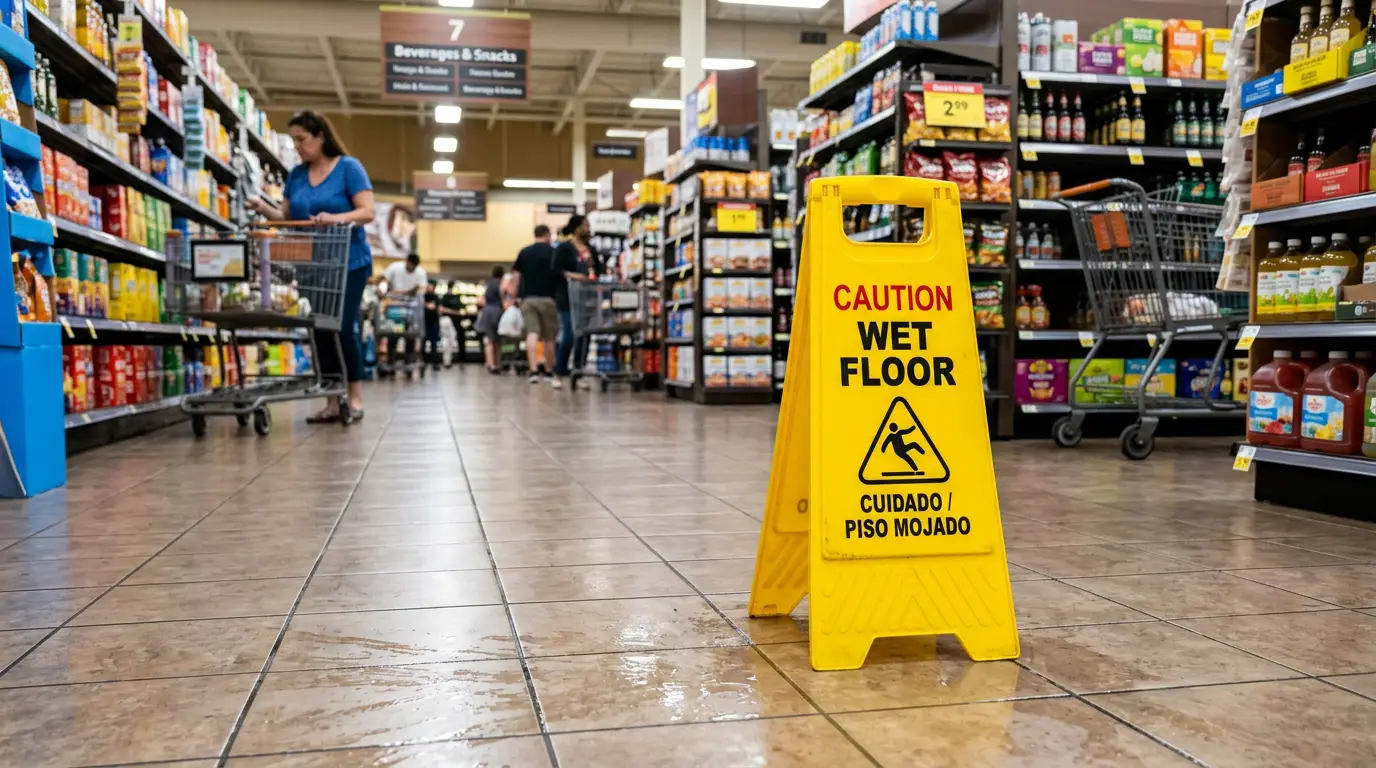
Imagine you are walking through a grocery store while briefly reading a text message. You step into a puddle of clear liquid that has been sitting in the aisle without a warning sign and fall.
Your phone use matters. But so does the puddle.
Arizona courts recognize that a landowner has a duty to make premises reasonably safe. For a business invitee, that can include using reasonable care to warn about or remedy an unreasonably dangerous condition when the business has notice of it. At the same time, a property owner is not automatically responsible merely because someone fell.
At Perez Law Group, we look at the entire sequence of events surrounding a fall, including the condition of the property, available surveillance footage, warning signs, witness statements, maintenance records, and allegations that the injured person was distracted.
How Arizona’s Comparative Negligence Law Applies
Arizona Revised Statutes § 12-2505 provides that a claimant’s damages can be reduced in proportion to the claimant’s relative degree of fault. The statute also provides that contributory negligence generally does not automatically bar the claim.
Here is a simple example.
Suppose you suffer serious injuries in a fall and your total damages are determined to be $100,000.
Evidence shows that a store failed to address a dangerous condition. However, you were looking at your phone immediately before the fall.
If you were ultimately assigned 25% of the fault, your $100,000 in damages could generally be reduced by 25%, leaving $75,000.
The percentages in a real case depend on the evidence. An insurance adjuster does not get to make an unquestionable final determination simply by saying, “You were on your phone, so this was your fault.”
Perez Law Group discusses this issue further in our guide to Arizona premises liability claims.
What If You Were Texting at the Exact Moment You Fell?
This can make the case more challenging, but it still does not necessarily end the claim.
There is an important difference between distraction and causation.
Consider two situations.
In the first, a person is texting while walking and trips over an ordinary curb that is clearly visible, properly maintained, and exactly where someone would reasonably expect it to be.
In the second, a person glances at a text and trips over broken flooring, an unexpected obstruction, an unmarked elevation change, or another dangerous condition that should have been repaired or marked.
Phone use exists in both situations, but the underlying property conditions are very different.
A careful investigation should therefore ask more than whether the injured person had a phone in hand.
The Property Owner’s Conduct Still Matters
A business does not necessarily escape responsibility because a customer was distracted.
Potentially dangerous conditions in a premises liability case can include:
- Wet or slippery floors
- Broken or uneven flooring
- Poorly placed merchandise or displays
- Objects obstructing walkways
- Loose cords
- Inadequate lighting
- Missing or unstable railings
- Dangerous stairs or unexpected changes in elevation
Perez Law Group provides additional examples on our Glendale slip-and-fall lawyer page.
The investigation may also focus on how long the dangerous condition existed, whether employees knew about it, whether reasonable inspections were performed, and whether adequate warnings were provided.
Those facts do not disappear simply because the injured person was holding a phone.
Could Surveillance Video Help or Hurt Your Case?
Absolutely.
In a phone-distraction case, surveillance footage may become some of the most important evidence available.
A video could show you staring at your phone for an extended period immediately before walking into a visible obstacle. That evidence could support an argument that you share responsibility.
But surveillance footage can tell a very different story.
It might show that you glanced at your phone for only a second. It could show the hazard was extremely difficult to see. It might reveal that other customers nearly fell in the same location. Perhaps employees walked past the dangerous condition repeatedly without correcting it.
Video could even show how long a spill or obstruction existed before your accident.
That is why preserving evidence quickly can be important.
Businesses routinely overwrite surveillance footage as part of their normal systems. After a serious fall, an attorney may send a preservation request asking the business to retain relevant footage and other evidence.
Be Careful What You Say in an Incident Report
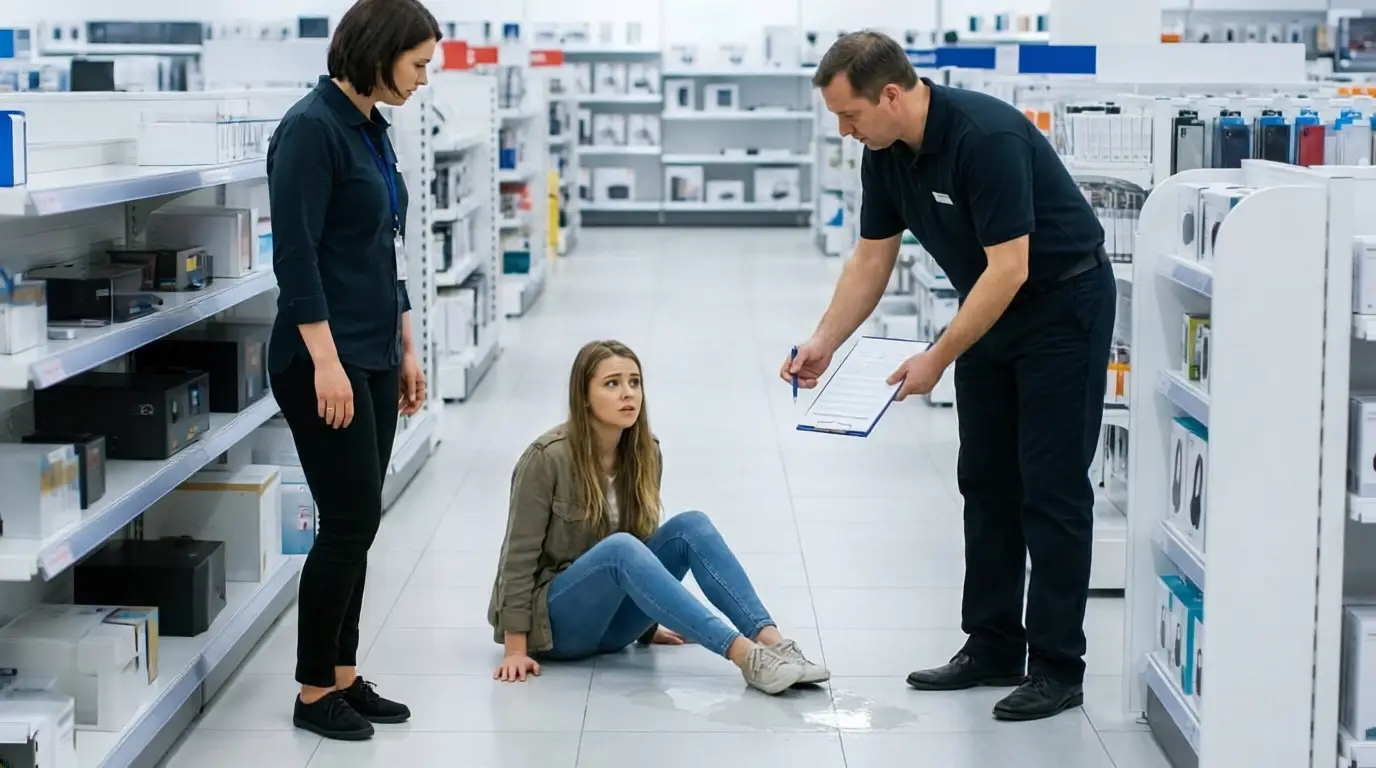
Another issue arises when a manager asks you to explain what happened immediately after the accident.
Suppose you write:
“I was looking at my phone and didn’t see the water.”
That statement may later be used to argue that distraction caused the accident.
But it does not answer several other important questions.
Why was there water on the floor? How long had it been there? Did employees know about it? Should they have known? Was there a warning sign? Could a reasonable customer have easily noticed the liquid?
An incident report written minutes after a painful and embarrassing accident rarely captures every relevant fact.
What Evidence Can Help When Phone Distraction Is Alleged?
Evidence becomes especially important when an insurance company tries to shift blame to the injured person.
Photos taken immediately after the fall may document a spill, broken flooring, poor lighting, missing warning signs, or another hazard before the property owner has an opportunity to clean or repair it.
Witnesses may be able to explain what they saw. Surveillance video may establish how the accident occurred. Maintenance and inspection records may provide information about what the business knew.
Even phone records can sometimes provide context. There is a meaningful factual difference between actively typing a lengthy text while walking and briefly checking a notification several seconds before encountering a hazard.
The goal should be to reconstruct what actually happened rather than allowing one unfavorable fact to define the entire case.
What Damages Could You Recover?
If another party is legally responsible for your fall, recoverable damages will depend on your injuries and circumstances.
A claim may include compensation for medical expenses, future medical treatment, lost income, reduced earning ability, pain and suffering, disability, and other losses caused by the injury.
Serious falls can result in fractures, torn ligaments, back and spinal injuries, traumatic brain injuries, shoulder injuries, and injuries requiring surgery or extended rehabilitation.
Comparative negligence affects how much of those damages may ultimately be recovered. It does not mean the damages themselves cease to exist.
What Should You Do After a Fall if You Were Using Your Phone?
Do not destroy, alter, or hide evidence of your phone use. You also should not assume that admitting you had your phone automatically makes you responsible for the accident.
Instead, preserve the evidence surrounding the entire incident.
Photograph the hazard and surrounding area if you safely can. Identify witnesses. Report the accident. Seek appropriate medical care. Keep copies of relevant documents and communications.
Also be cautious about making broad statements such as “It was completely my fault” when you may not yet know what caused the dangerous condition or how long it existed.
If the accident occurred on government-controlled property, contact an attorney promptly because special deadlines may apply. For many Arizona personal injury lawsuits, A.R.S. § 12-542 generally provides a two-year limitations period, but some claims have substantially shorter deadlines.
Were You Distracted by Your Phone When You Fell? Your Claim May Still Be Worth Investigating
Using your phone before a fall is relevant evidence. It is not necessarily the end of an Arizona premises liability claim.
The more useful question is: What would have happened if the dangerous condition had not been there?
If you would not have fallen despite being distracted, there may still be an important question about the property owner’s responsibility. Arizona’s comparative negligence rules allow fault to be divided based on the circumstances instead of automatically treating one mistake as a complete bar to compensation.
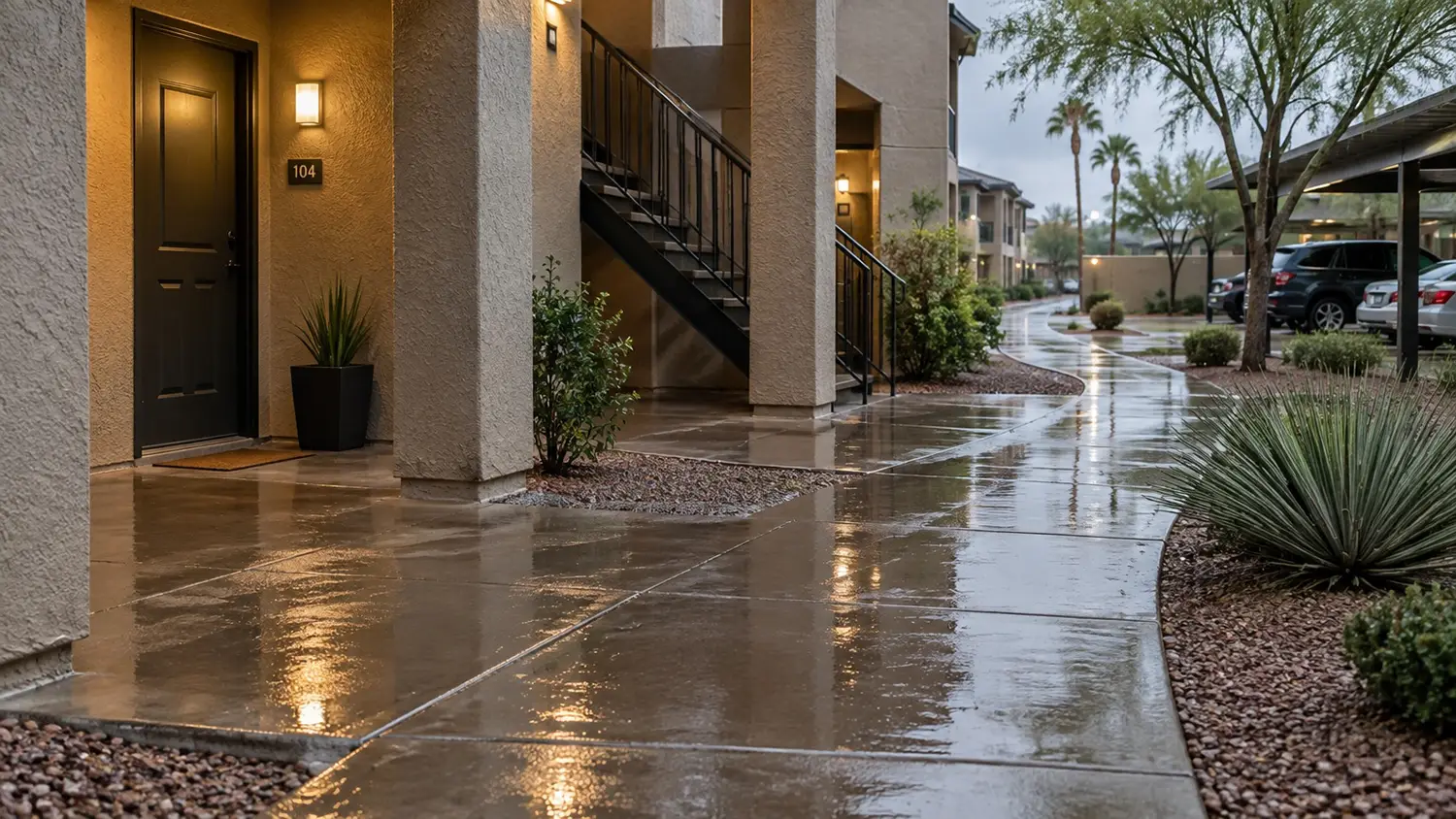
If you were injured in a fall at a store, apartment complex, restaurant, hotel, parking lot, or another property, Perez Law Group’s premises liability attorneys can review what happened and help determine whether you may have a claim.
Perez Law Group, PLLC represents injured clients throughout Arizona. Call (602) 730-7100 to schedule a consultation.

Cristina Perez Hesano
Founder & Managing Partner
Cristina Perez Hesano is the founding partner of Perez Law Group, PLLC, and an accomplished Arizona trial attorney with more than a decade of experience. She represents individuals and families in serious personal injury, wrongful death, bankruptcy, and consumer protection matters. Known for her compassion, strategic approach, and dedication to justice, Cristina has successfully secured significant results while helping clients navigate some of life’s most difficult challenges.