Can a Car Accident Cause a Rotator Cuff Tear or Serious Shoulder Injury?
- A car accident can cause a rotator cuff tear or other serious shoulder injury, even without a direct blow to the shoulder.
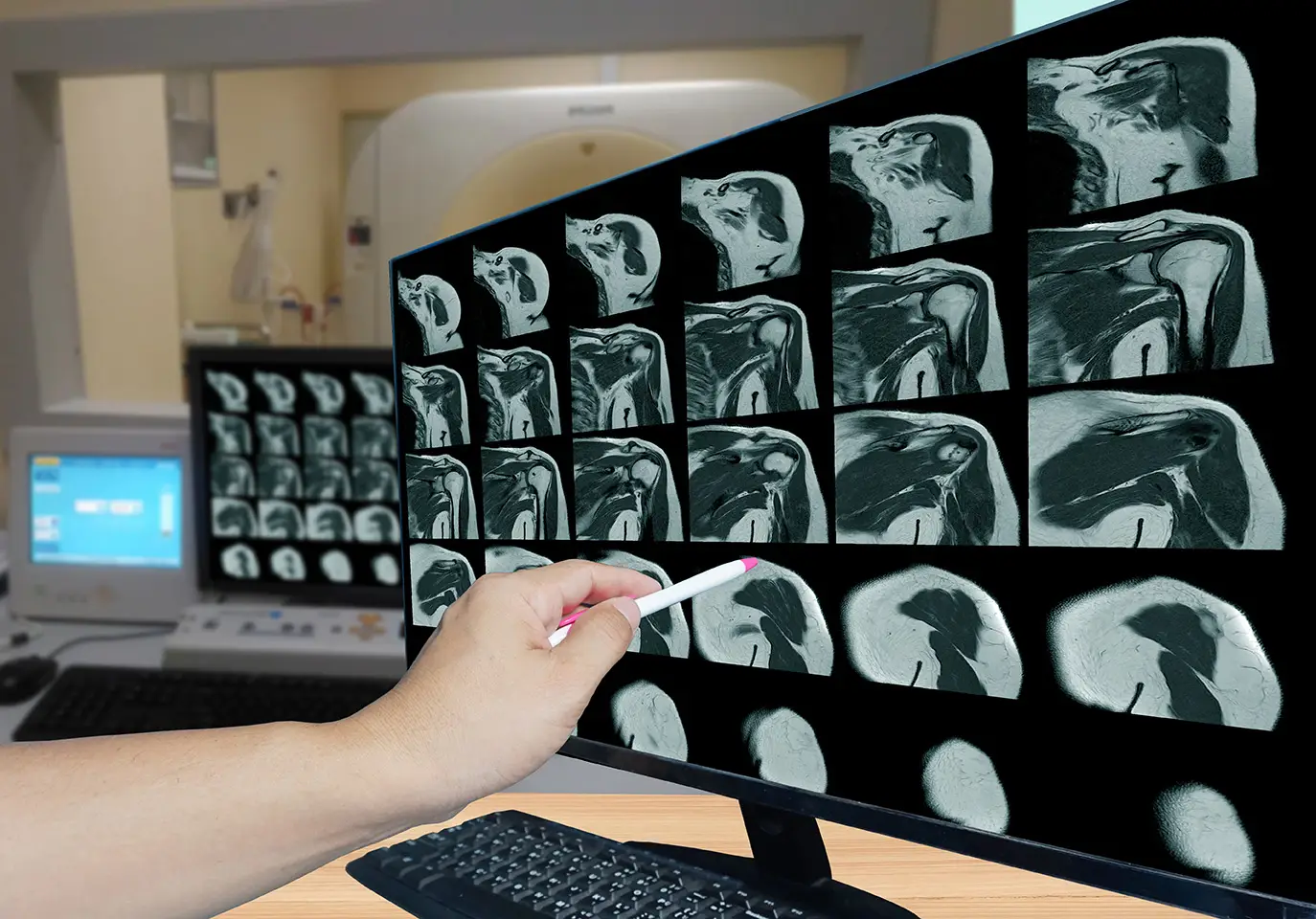
- A normal X-ray does not rule out a rotator cuff tear because X-rays do not clearly show soft tissue damage. An MRI or ultrasound may be needed.
- Insurance companies may argue that a rotator cuff tear was caused by age or degeneration, so the timing of symptoms and medical treatment can be important.
- A pre-existing shoulder condition does not automatically prevent an injury claim if the accident aggravated or worsened the condition.
- Strong shoulder injury claims are often supported by a consistent medical timeline showing the crash, onset of symptoms, diagnosis, treatment, and resulting limitations.
Yes. A car accident can cause a rotator cuff tear or another serious shoulder injury.
The shoulder is one of the most mobile joints in the body, but that flexibility also makes it vulnerable when your body is suddenly thrown, twisted, restrained, or struck during a collision. A driver may brace against the steering wheel, a passenger may be thrown against the door, or a seat belt may restrain one side of the upper body while the rest of the body continues moving.
Any of these forces can injure muscles, tendons, ligaments, nerves, or bones around the shoulder.
The difficult part is that a serious shoulder injury does not always look serious immediately after the accident. You may have no broken bones. An emergency room X-ray may look normal. You may even be able to move your arm.
Then the shoulder becomes increasingly painful, weak, or difficult to use.
At Perez Law Group, PLLC, we believe shoulder injury claims should be evaluated based on the entire medical timeline, not simply what happened during the first few hours after a crash.
If you were injured in an Arizona collision, our Glendale car accident attorneys can review the accident, medical evidence, insurance coverage, and the effect the injury has had on your life. Glendale car accident attorneys
What Is a Rotator Cuff Tear?
The rotator cuff is a group of muscles and tendons surrounding the shoulder joint. These tissues help keep the upper arm bone positioned in the shoulder socket while allowing you to raise, rotate, and control your arm.
According to MedlinePlus, a rotator cuff tendon can tear gradually over time or suddenly because of an injury. A tear may be partial or may extend completely through the tendon. MedlinePlus information about rotator cuff injuries
The American Academy of Orthopaedic Surgeons similarly recognizes injury and gradual wear as the two major causes of rotator cuff tears.
That distinction becomes particularly important after a car accident because an insurance company may argue that a rotator cuff problem developed from age or normal degeneration rather than the crash.
Sometimes that is true.
Sometimes the collision caused a new tear.
And sometimes a person already had age-related tendon changes that were painless until the collision turned them into a symptomatic injury.
Those are three very different medical situations.
How Can a Car Accident Injure the Rotator Cuff?
There does not have to be a direct blow to the shoulder for a rotator cuff injury to occur.
Imagine a driver who sees another vehicle entering the intersection and instinctively locks both arms against the steering wheel. The collision suddenly pushes the driver’s body forward and sideways while the arms remain braced.
That force travels through the hands, arms, and shoulders.
Another person may strike the shoulder against the door or center console. During a rollover, an occupant might extend an arm to protect the head or body. A seat belt can also place substantial force across the shoulder while restraining the torso.
We discuss that mechanism in more detail in our article about seat belt shoulder, chest, and rib injuries after a car accident.
The collision may cause more than a rotator cuff tear. Other possible shoulder injuries include:
- Shoulder strains and sprains
- Labral tears
- Tendon inflammation
- Shoulder impingement
- Dislocation or partial dislocation
- Fractures involving the collarbone or upper arm
- Nerve injuries affecting the shoulder and arm
This is one reason “my shoulder hurts” is not a diagnosis.
The location of the pain, mechanism of the collision, weakness, range of motion, examination findings, imaging, and response to treatment may all help determine what was actually injured.
What Are Signs of a Rotator Cuff Tear After a Crash?
Shoulder soreness for a few days after a collision does not automatically mean you have a torn rotator cuff.
Certain symptoms, however, deserve medical attention, particularly if they continue or worsen.
Mayo Clinic identifies shoulder pain, weakness, difficulty performing activities such as reaching behind your back, and pain that interferes with sleep as possible rotator cuff injury symptoms. Mayo Clinic also notes that rotator cuff tears can occur from a single traumatic injury. Mayo Clinic information on rotator cuff injuries
After a car accident, pay attention to changes such as difficulty raising the injured arm, weakness when lifting objects, pain while reaching overhead, clicking or popping, reduced range of motion, or shoulder pain that becomes worse at night.
One particularly important clue is a change in function.
Before the accident, could you reach into an overhead cabinet, carry groceries, lift your child, work with tools, exercise, or sleep on that shoulder without difficulty?
Can you still do those things afterward?
That difference can matter both medically and in a personal injury claim.
Can an X-Ray Miss a Rotator Cuff Tear?
Yes.
An X-ray is useful for examining bones and can help doctors identify fractures, arthritis, bone spurs, and certain other abnormalities. But a rotator cuff tear involves soft tissue.
Mayo Clinic explains that a rotator cuff tear itself generally will not appear on an X-ray. Ultrasound and MRI can provide more information about muscles, tendons, and other soft tissues. Mayo Clinic rotator cuff diagnosis information
This helps explain a situation that can be confusing after an accident.
You go to the emergency room.
Your shoulder X-ray shows no fracture.
You are discharged.
Three days later, you can barely lift your arm.
A normal X-ray does not necessarily mean the shoulder is uninjured. It means the test did not identify certain abnormalities that the X-ray is designed to show.
We recently addressed this larger issue in What If the Hospital Says I Am Fine but I Still Have Pain After a Car Accident?
Persistent or worsening symptoms deserve appropriate medical follow-up.
Does an MRI Prove the Accident Caused the Tear?
Not by itself.
An MRI can provide detailed images of the shoulder and may identify a partial tear, complete tear, tendon damage, inflammation, or other abnormalities.
But the scan does not automatically answer when the tear occurred.
That distinction is extremely important in a personal injury claim.
Suppose an MRI identifies a rotator cuff tear six weeks after a collision. An insurance company may argue that the tear existed before the crash, particularly if the patient is older or the radiology report mentions degenerative changes.
The better analysis looks at more than the scan.
Were there shoulder problems before the accident? Was the person receiving treatment? When did the new symptoms begin? Were shoulder complaints documented shortly after the crash? Did the person’s ability to work or perform normal activities change? Do the treating doctors believe the accident caused or aggravated the condition?
As we explain in our guide to MRI evidence after a car accident, imaging is most persuasive when it fits into a consistent medical timeline.
What If You Already Had Shoulder Problems?
A pre-existing shoulder condition does not automatically eliminate an Arizona personal injury claim.
Rotator cuff degeneration becomes more common with age. Someone may have tendon wear, arthritis, or even an asymptomatic tear before being involved in a collision.
The important question may be what changed.
For example, imagine a 58-year-old construction worker who occasionally had mild shoulder soreness after long workdays but had never needed injections, physical therapy, or surgery.
After a rear-end crash, he develops significant shoulder pain and weakness. He cannot comfortably lift his arm overhead and can no longer perform parts of his job. An MRI identifies degenerative changes along with a rotator cuff tear.
The insurer may focus on the degeneration.
But the medical and legal investigation should also examine what the worker could do before the crash compared with what he can do now.
Arizona law may permit recovery when another person’s negligence aggravates a pre-existing condition. We discuss this issue further in Can a Car Accident Aggravate a Pre-Existing Condition?
Illustrative Case Study: Why the Medical Timeline Matters
Consider two people with exactly the same MRI finding.
Both have a partial rotator cuff tear.
The first person reports shoulder pain at the emergency room immediately after the collision. The pain continues. A doctor documents weakness and reduced range of motion. Physical therapy does not resolve the problem, so an MRI is eventually ordered and identifies the tear.
There is a logical sequence:
Collision → shoulder symptoms → examination findings → continued problems → MRI diagnosis.
Now consider the second person.
There is no shoulder complaint in the initial medical records. The person receives no shoulder treatment for three months. After lifting furniture at home, the shoulder suddenly becomes painful. An MRI then identifies the same partial rotator cuff tear.
The MRI finding may be identical, but proving what caused it could be much more difficult.
This is why we believe a strong shoulder injury claim should not be built around the MRI alone.
It should be built around the medical timeline and the loss of function.
What Compensation May Be Available for a Serious Shoulder Injury?
A significant rotator cuff tear can affect far more than the shoulder itself.
A mechanic, construction worker, nurse, warehouse employee, hairstylist, electrician, landscaper, or anyone else whose job requires lifting and reaching may struggle to perform essential work.
Even office workers can have difficulty driving, typing, carrying a laptop, sleeping, dressing, cooking, or caring for children.
Depending on the circumstances of the accident and injury, an Arizona personal injury claim may seek compensation for medical treatment, rehabilitation, lost wages, reduced earning ability, future medical care, pain, and other accident-related losses.
Some patients recover with physical therapy and conservative treatment. Others may require injections or surgery.
That uncertainty is one reason accepting a settlement before doctors understand the long-term condition of the shoulder can create problems. Once a claim is fully settled and released, you generally cannot return to the insurance company months later because your doctor recommends surgery.
Talk With an Arizona Car Accident Attorney About a Shoulder Injury
A rotator cuff tear can be a genuine traumatic injury after a car accident, but proving the connection between the collision and the tear may require more than showing an MRI report to an insurance adjuster.
The timing of your symptoms, medical examinations, imaging, prior shoulder history, treatment, work limitations, and changes in your everyday activities can all become important evidence.
Perez Law Group, PLLC represents people injured in car accidents throughout Glendale, Phoenix, the West Valley, and communities across Arizona.
Our attorneys can review how the collision occurred, the medical records, insurance coverage, lost income, future treatment needs, and other evidence related to your shoulder injury.
Arizona personal injury lawsuits are generally subject to a two-year limitation period under A.R.S. § 12-542, although exceptions and shorter deadlines can apply in certain circumstances. Arizona Revised Statutes § 12-542
To discuss your accident, contact Perez Law Group, PLLC at (602) 730-7100.
Hablamos Español.
This article provides general educational information and is not medical or legal advice. Seek qualified medical care for significant, persistent, or worsening shoulder symptoms. Every personal injury claim depends on its individual facts, evidence, insurance coverage, and applicable law.

Cristina Perez Hesano
Founder & Managing Partner
Cristina Perez Hesano is the founding partner of Perez Law Group, PLLC, and an accomplished Arizona trial attorney with more than a decade of experience. She represents individuals and families in serious personal injury, wrongful death, bankruptcy, and consumer protection matters. Known for her compassion, strategic approach, and dedication to justice, Cristina has successfully secured significant results while helping clients navigate some of life’s most difficult challenges.