Tesla Autopilot Crash Evidence: Brett Schreiber on Recovering Critical Data
- Key Takeaways
- The Search for a Missing Autopilot Computer
- Finding Someone Who Could Recover the Data
- What Tesla Autopilot Crash Data May Help Explain
- The Legal Themes: Discovery, Authentication, and Accountability
- Driver Assistance Is Not a Substitute for Safe Driving
- Growing a Firm Without Losing Its Purpose
- Practical Next Steps After a Serious Crash

Key Takeaways
- According to Brett Schreiber, a missing Autopilot computer led his team to critical crash evidence.
- Vehicle data can help explain system activity, driver inputs, and the sequence of a collision.
- Discovery disputes may involve technical experts, court intervention, and strict deadlines.
- Driver-assistance features should not be treated as permission to drive impaired or stop paying attention.
- The interview also explores growing a trial-focused firm without losing personal attention or a healthy workplace culture.
What happens when potentially important crash evidence appears to be missing—and the people who understand the technology say recovering it cannot be done? In this episode of Verdicts & Vogue, Cristina Perez Hesano speaks with trial attorney Brett Schreiber about an investigation that, according to his account, required tracking down a vehicle computer, finding an unconventional technical specialist, and challenging Tesla’s responses in court.
The conversation offers more than a dramatic evidence-recovery story. It explains why modern vehicle cases can require both traditional investigative work and sophisticated digital analysis. It also raises practical questions for Phoenix drivers and injured families: What information might a vehicle contain? Who has it? And how can an attorney investigate whether a driver-assistance system contributed to a crash?
The Search for a Missing Autopilot Computer
Schreiber recounts joining a Miami case a few months before trial and asking to examine the vehicle and its Autopilot computer. According to the interview, Tesla had purchased the vehicle, but the computer itself could not initially be located.
The breakthrough came through an ordinary investigative step: questioning a police officer whose name appeared on an evidence-storage log. Schreiber says the officer identified another storage location that the legal team had not checked.
At that facility, an evidence clerk located the equipment. According to Schreiber, it had been sitting on a shelf for approximately four years.
His lesson is straightforward: seemingly minor witnesses and administrative records can matter. An evidence log may not explain why a crash happened, but it can identify where the equipment needed to answer that question was stored.
Finding the Hardware Was Only the Beginning
Recovering the computer did not immediately resolve the dispute. Schreiber says that when he asked Tesla to assist with extracting its data, the company responded that discovery had closed. He acknowledges in the interview that the discovery deadline had passed.
His team sought court intervention through a motion to compel while continuing to investigate possible extraction methods. That distinction matters: locating evidence, obtaining access to it, interpreting it, and using it in litigation are separate challenges.
Finding Someone Who Could Recover the Data
Schreiber describes learning through a news report about a Russian technical specialist named Oleg who worked with Tesla Autopilot computers. After attempts to make contact directly and through a reporter, Schreiber arranged a video conversation.
According to his account, Oleg said extracting the information was work he performed regularly. During their call, he showed Schreiber computer chips and equipment associated with that work.
Schreiber says he retained Oleg, who traveled to Miami, and also brought in a domestic specialist in data cloning. The team extracted information from the recovered computer. Shortly afterward, Schreiber recalls reviewing data and video at a Starbucks in Coral Gables.
He says the recovered material helped his team understand the collision and included code indicating that Tesla had received relevant data shortly after the crash. He alleges that this contradicted the company’s prior representations about data availability.
Schreiber also reports that Tesla faced sanctions related to its conduct. These descriptions of the recovery, company responses, and sanctions are his account in the interview, rather than independent findings presented here. The discussion also describes a favorable Miami verdict and an ongoing appeal at the time of recording; it should not be read as a final appellate outcome.
What Tesla Autopilot Crash Data May Help Explain
Schreiber describes diagnostic logs containing extensive information about vehicle operation. In his experience, those records can include whether particular assistance features were active, driver inputs, steering torque, and seat-belt status.
For an injured person, the practical value is not simply the volume of information. It is whether reliable records help answer specific questions:
- Which driving-assistance features were active before impact?
- What steering or other inputs did the driver make?
- What does available video show about the surrounding conditions?
- Do records stored in the vehicle differ from information produced by the manufacturer?
- Does the evidence support—or contradict—witness recollections?
The existence of data does not automatically establish fault. Its meaning depends on the vehicle, hardware, software, available records, and surrounding evidence. Schreiber emphasizes that alleged defects can differ across Tesla configurations, making a vehicle-specific investigation important.
The Legal Themes: Discovery, Authentication, and Accountability
Testing Responses About Evidence
A central theme is the importance of understanding what an opposing party means when it says information is unavailable. Schreiber describes using technical knowledge to identify particular directories, folders, and file paths when requesting records in later cases.
The broader lesson is not that every missing record signals wrongdoing. Rather, an effective investigation may require precise requests and informed follow-up instead of accepting an ambiguous response without further inquiry.
Connecting Public Statements to Technical Reality
Cristina and Schreiber also discuss public claims about Tesla’s capabilities. Schreiber says he sought admissions confirming that Elon Musk made particular statements and questioned engineers about whether those statements matched production vehicles’ capabilities at the relevant time.
This illustrates two different evidentiary questions: whether a statement is authentic and whether its substance is accurate. According to Schreiber, Tesla ultimately provided admissions concerning statements he sought to use, and he had not taken Musk’s deposition at the time of the interview.
Protective Orders and Information Sharing
The attorneys discuss another tension: information obtained in one lawsuit may be subject to a protective order restricting disclosure or use. Schreiber describes advocating for sharing provisions that allow appropriate collaboration among lawyers handling related matters.
The practical point is that useful information is not necessarily freely shareable. Attorneys must work within the governing orders while seeking appropriate access through lawful procedures.
Driver Assistance Is Not a Substitute for Safe Driving
Schreiber expresses support for autonomous-driving innovation while strongly criticizing Tesla’s approach. He discusses concerns about camera-based systems, sensor redundancy, and the gap between public expectations and actual capabilities. Those technical assessments and predictions are his views.
Cristina also recounts conversations with people who believed their vehicles could take them home after drinking. Both speakers reject that reasoning. The practical safety message is clear: do not treat driver-assistance technology as a designated driver or assume a feature name eliminates the need for attentive, sober operation.
Growing a Firm Without Losing Its Purpose
Beyond Tesla litigation, Schreiber discusses building a firm that, according to the interview, expanded to approximately 20 offices across nine states, with more than 100 lawyers and more than 400 staff members.
He credits operational leadership with allowing him to continue taking depositions and trying cases. He also describes “stay interviews”—asking employees why they remain with the firm rather than waiting until they leave to seek feedback.
His stated goal is to “institutionalize excellence,” not bureaucracy. Looking ahead, he emphasizes stabilization, trial readiness, better communication, and automating repetitive tasks so people can focus on more strategic work. Personally, he describes protecting evening time with his four children, acknowledging that he does not succeed every day.
Practical Next Steps After a Serious Crash
For Arizona families, the interview underscores why evidence questions deserve early attention. After addressing immediate safety and medical needs, preserve photographs, witness information, insurance correspondence, and any available recordings. Before authorizing disposal, repairs, or technical work on a potentially important vehicle, discuss evidence preservation with an attorney. Avoid attempting computer extraction yourself.
You do not need to know whether a software problem, driver error, or another issue caused the collision before asking for help. An investigation is intended to examine those possibilities, not assume the answer.
This article provides general information, not legal advice. Legal options depend on the facts and applicable law.
If you or someone you love was injured in a serious vehicle crash in Phoenix or elsewhere in Arizona, contact Perez Law Group to discuss your circumstances, evidence-preservation concerns, and potential next steps.
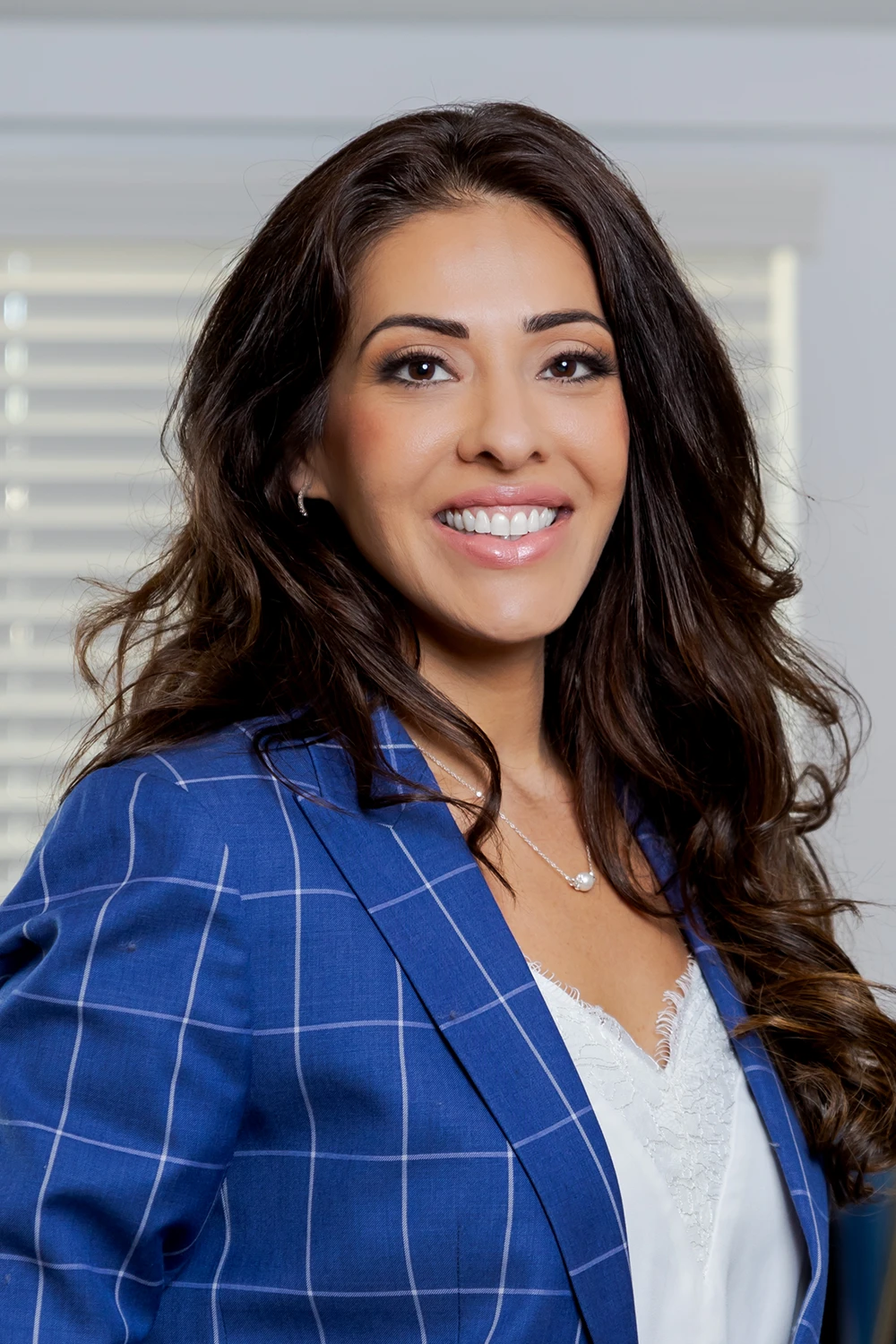
Cristina Perez Hesano
Founder & Managing Partner
Cristina Perez Hesano is the founding partner of Perez Law Group, PLLC, and an accomplished Arizona trial attorney with more than a decade of experience. She represents individuals and families in serious personal injury, wrongful death, bankruptcy, and consumer protection matters. Known for her compassion, strategic approach, and dedication to justice, Cristina has successfully secured significant results while helping clients navigate some of life’s most difficult challenges.