Injured by a Food-Delivery Driver in Arizona: Which Insurance Applies?
- Fault and Insurance Coverage Are Different Questions
- Which Policies Should Be Investigated?
- Why the Exact Delivery Timeline Matters
- What Evidence Can Help Establish Delivery Status?
- What If the Insurers Keep Referring You to Each Other?
- How Can You Address Medical Bills While Coverage Is Investigated?
- Do Not Let a Coverage Investigation Distract You From Deadlines
- Frequently Asked Questions
- Talk With Perez Law Group About a Food-Delivery Accident
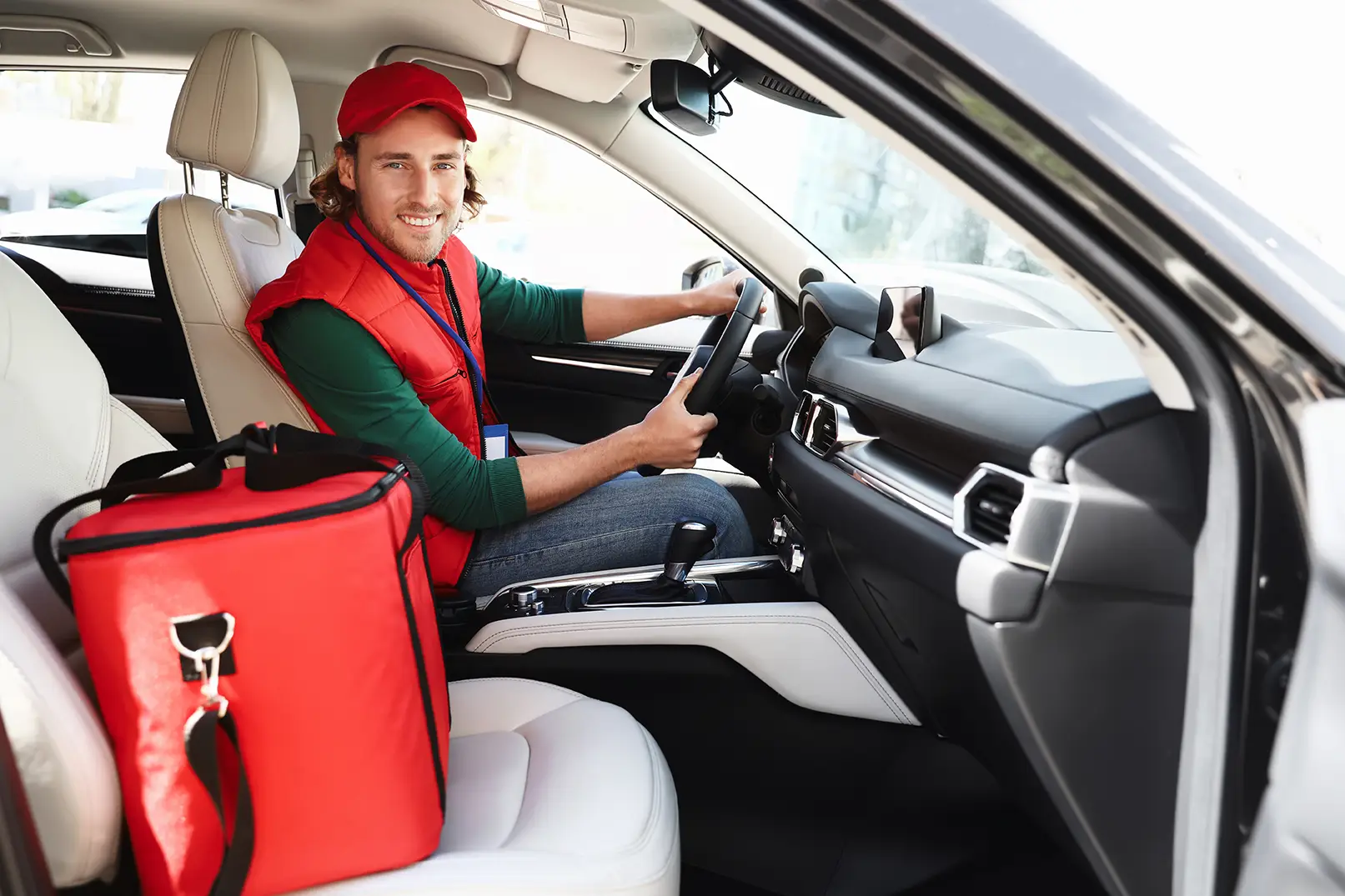
- A food-delivery crash may involve the driver’s personal auto insurance, a restaurant’s commercial coverage, or insurance maintained by a delivery platform. Coverage must be investigated rather than assumed.
- The driver’s activity at the exact time of the collision can matter: waiting for an order, driving to a restaurant, completing a delivery, and finishing a shift may receive different treatment.
- A personal insurer’s denial does not, by itself, establish that every possible source of compensation is unavailable.
- DoorDash and Uber publish different guidance for delivery coverage. A rideshare insurance summary should not automatically be applied to a food-delivery claim.
- Preserve evidence of both the crash and the delivery: timestamps, witness information, order details, and communications with insurers can help resolve disputed facts.
Being injured by a food-delivery driver can leave you dealing with more than the usual accident paperwork. The driver gives you a personal insurance card, but the insurer later says the vehicle was being used for deliveries. A restaurant refers you to an app. The app asks whether the driver had accepted an order before the collision.
Which insurance applies depends on the policies in effect and what the driver was doing when the crash occurred. A personal auto policy, business policy, or platform policy may be relevant. More than one insurer may need to investigate. The first step is to establish the delivery timeline and identify the available policies—not to assume that a familiar company name guarantees payment.
For someone recovering from an accident in Glendale, Peoria, or elsewhere in the Phoenix area, understanding those questions can make the claims process less confusing.
Fault and Insurance Coverage Are Different Questions
A crash investigation asks who caused the collision and how it injured you. An insurance investigation also asks whether a particular policy covers that person, vehicle, and activity.
Those questions can produce different disputes. An insurer might agree that its driver caused the crash but contend that a delivery-use exclusion applies. Another insurer might accept that its policy potentially applies while disputing how the collision happened or the extent of the injuries.
Ask an adjuster to clarify what is actually being questioned: responsibility for the crash, insurance coverage, or the amount of the claim. That distinction helps identify the records needed next.
Arizona’s Department of Insurance and Financial Institutions explains that bodily injury liability coverage addresses injuries to others for which the insured is legally responsible. It also cautions that business use may require commercial auto coverage. See the department’s Arizona automobile insurance guide.
Which Policies Should Be Investigated?
The Driver’s Personal Auto Policy
The insurance card exchanged at the scene is a starting point. It does not show every exclusion, endorsement, or condition in the policy.
Personal auto insurance may restrict certain business or delivery activities. Some drivers have additional coverage that addresses delivery work; others may have a policy that already covers particular delivery uses. The actual wording matters. The National Association of Insurance Commissioners’ auto insurance overview explains the differences between personal and business auto coverage.
If the personal insurer questions coverage, identify the policy provision it relies on and the facts it believes trigger that provision. Do not assume that every personal auto policy excludes all food delivery, or that the driver’s failure to buy an endorsement necessarily ends your claim.
Insurance Maintained by a Delivery Platform
When the driver was using a delivery app, investigate whether insurance maintained by that platform applies. Relevant questions include:
- Which platform was the driver using?
- Had the driver accepted an order before the collision?
- Was the order still active, or had it been completed, canceled, or unassigned?
- Which state’s coverage documents and policy period apply?
- Was the driver using more than one delivery app?
A delivery bag or app logo is a useful lead, but it does not establish coverage by itself. The Federal Trade Commission’s guidance on delivery driving and insurance highlights why drivers and injured parties should examine the actual coverage rather than assume the company pays for every accident.
A Restaurant or Other Business Policy
Not every food delivery is arranged through an app. A restaurant may employ its own drivers, use company vehicles, or have employees deliver in their personal cars.
For a direct restaurant delivery, investigate the restaurant’s legal identity, who owned the vehicle, the driver’s work assignment, and any commercial auto or other potentially applicable business coverage. When a personal car is involved, ask whether the business has coverage addressing vehicles it does not own.
The restaurant’s name on the food packaging does not establish that it employed the driver or insured the trip. Identifying the actual delivery arrangement is essential before drawing conclusions about responsibility or coverage.
Why the Exact Delivery Timeline Matters
“The driver was working” may be too general to resolve an insurance dispute. A more useful timeline identifies the crash time and compares it with the order’s acceptance, pickup, cancellation, and completion records.
| Driver’s activity | Question to investigate |
|---|---|
| Offline or on a personal trip | Was any delivery activity still relevant, and does the personal policy cover the trip? |
| Logged in and waiting for an order | Does the applicable platform policy cover that waiting period? |
| An order accepted, but food not yet picked up | Does coverage begin when the order is accepted? |
| Food collected and delivery underway | Was the order active at the time of impact? |
| Order completed, canceled, or unassigned | Had the applicable coverage period ended, or was another order active? |
This is an investigation checklist, not a universal coverage chart. Each platform and policy must be checked separately.
What DoorDash’s Current Guidance Says
DoorDash’s current help page places Arizona within its “All Other US States” category. That section describes third-party auto liability insurance during a delivery-service period, beginning when a driver accepts a delivery request and ending when the order is marked delivered, unassigned, or canceled. It says the driver’s auto insurance is primary when the driver is online but has not accepted a request.
The section also ties consideration of coverage to the driver being liable for another party’s damages or injuries. These points come from DoorDash’s published insurance guidance; they do not replace the policy governing a particular accident.
Why Uber Eats Requires a Separate Review
Uber publishes a separate insurance page for delivery trips. It explains that third-party liability coverage may apply depending on the state and whether the driver was online, traveling to a pickup, or on a delivery trip. It directs drivers to their app for state-specific insurance details.
That means a general Uber passenger-rideshare coverage chart is not enough to evaluate an Uber Eats collision. Obtain the delivery-specific documents for the state and date of the crash. Neither a platform’s public summary nor a certificate of insurance answers every question about exclusions, insured persons, or how policies interact.
What Evidence Can Help Establish Delivery Status?
Medical attention and immediate safety come first. When it is safe, collect the other driver’s identity, vehicle information, insurance details, and the police report number. Tell the investigating officer if you know the driver was making a delivery, and explain how you know.
For the insurance investigation, useful information may include:
- A precise crash time and location. Preserve original photographs, dashcam files, and other records with timestamps.
- The driver’s statements about the trip. Record what was said accurately, including the platform or restaurant identified. Distinguish your observations from assumptions.
- Delivery information voluntarily provided. An order number, restaurant name, receipt, or screenshot may help identify the trip. Do not access another person’s phone or account without permission.
- Independent evidence. Witness details and nearby business-camera locations can help establish the sequence of events.
- Claim correspondence. Save reporting confirmations, emails, letters, claim numbers, and adjuster contact information.
An attorney can consider preservation requests for relevant app, dispatch, and delivery records. Some information may require formal legal procedures to obtain. Keeping your own originals is valuable even when a company has separate records.
What If the Insurers Keep Referring You to Each Other?
Start by organizing the claims. For each insurer, record its name, claim number, assigned adjuster, and the issue it says remains unresolved.
Ask for a written explanation if coverage is denied. Useful follow-up questions include:
- Which policy provision supports the denial?
- What delivery status or other facts did the insurer rely on?
- Is the decision final, or is the investigation still open?
- What additional information would the insurer consider?
- Has another potentially applicable insurer been identified?
Do not assume that one denial automatically triggers another policy. Conversely, do not treat a single denial as proof that no other coverage exists. Report the facts accurately to each relevant insurer and keep a consistent record of what you submitted.
Before signing a settlement release, understand which claims and parties it covers. A payment for vehicle damage and a settlement of an injury claim address different losses, but the wording of the release controls what you are agreeing to resolve.
How Can You Address Medical Bills While Coverage Is Investigated?
Keep medical bills, treatment records, receipts, work restrictions, and documentation of missed income together. A clear record helps separate the consequences of the injury from the dispute over who should pay.
Ask about benefits available through your own coverage while the liability claim is pending. Arizona DIFI explains that medical payments coverage can pay qualifying accident-related medical expenses up to the policy limit. Uninsured and underinsured motorist coverage may also be relevant when the responsible driver lacks applicable liability coverage or has insufficient limits, subject to the policy and law.
Arizona’s uninsured and underinsured motorist statute, A.R.S. § 20-259.01, addresses these coverages. They are not benefits you should assume every policy includes. Ask your insurer or attorney to review what you purchased and how it applies to the facts.
Tell your attorney about payments made by health insurers or other benefit providers so any reimbursement interests can be evaluated before settlement funds are distributed. Do not assume a liability insurer will pay each medical bill as it arrives.
For broader help with the injury claim, learn about Perez Law Group’s car accident representation in Peoria and the surrounding area.
Do Not Let a Coverage Investigation Distract You From Deadlines
Arizona generally provides a two-year limitations period for personal injury actions under A.R.S. § 12-542. The date a claim accrues, exceptions, and other deadlines require individual review.
Do not assume that an open insurance claim or ongoing negotiations extend the time to file suit. Policy notice requirements and evidence-preservation needs may also arise much sooner. Getting advice early gives you time to investigate both the collision and the coverage questions.
Frequently Asked Questions
Does a delivery driver’s personal insurance automatically cover my injuries?
No. The insurer must evaluate the policy, any delivery-related provisions, and the driver’s activity. A personal policy may apply, but an insurance card alone does not establish coverage for a commercial delivery.
Does every food-delivery accident have $1 million in insurance available?
No universal amount should be assumed. Available coverage depends on the applicable policy, state, delivery status, and accident date. A published limit is also not a promise that an injured person will receive that amount.
What if the driver had accepted an order but had not picked up the food?
The acceptance time may matter. A platform’s coverage period can begin before food is picked up. Compare the order history with the crash time and the actual policy terms rather than relying only on whether food was in the car.
Can I sue the app company or restaurant?
That requires a separate legal analysis. Insurance maintained by a platform and the platform’s own liability are different issues. The driver’s relationship with the business, the work being performed, and any alleged wrongdoing must be investigated before deciding which parties to name.
What should I bring to an initial consultation?
Bring the crash report or report number, photographs, insurance information, medical records you have, claim letters, and any evidence of the driver’s delivery status. A short timeline and a list of insurers already contacted can help make the discussion more productive. You do not need to have solved the coverage dispute first.
Talk With Perez Law Group About a Food-Delivery Accident
If a food-delivery driver injured you in Glendale, Peoria, or the greater Phoenix area, you may have questions about which insurer should respond and what to do when coverage is disputed.
Contact Perez Law Group, PLLC at (602) 730-7100 or use the firm’s contact page to request a consultation. Bring any denial letters and delivery information you have so the discussion can address the facts of your accident and the next steps available to you.
This article provides general information, not legal advice for a particular accident. Coverage depends on applicable law and the policies in effect when the crash occurred.

Cristina Perez Hesano
Founder & Managing Partner
Cristina Perez Hesano is the founding partner of Perez Law Group, PLLC, and an accomplished Arizona trial attorney with more than a decade of experience. She represents individuals and families in serious personal injury, wrongful death, bankruptcy, and consumer protection matters. Known for her compassion, strategic approach, and dedication to justice, Cristina has successfully secured significant results while helping clients navigate some of life’s most difficult challenges.