What If I Told the Police or Insurance Company I Was “Fine” After a Car Accident?

- Saying “I’m fine” at the accident scene does not automatically ruin your injury claim. Some car accident injuries and symptoms develop hours or even days later.
- Insurance companies may use your statement to question your claim, but that statement should be considered alongside your medical records, treatment history, and how your symptoms developed.
- Be accurate about when your symptoms started. If you initially felt fine but developed pain later, explain that timeline consistently to doctors, insurers, and your attorney.
- Delaying medical care can create a bigger problem than the initial statement itself. A long gap in treatment may give the insurer another reason to argue that your injuries were unrelated to the crash.
- Do not exaggerate or minimize your condition. If you are unsure whether you are injured, saying “I’m not sure yet” can be more accurate than automatically saying you are fine.
You have just been in a car accident. The police officer asks whether you are hurt.
You are standing up. Nothing appears broken. Your adrenaline is still going. You want to get home.
So you say, “I’m fine.”
Later, an insurance adjuster calls and asks how you are feeling. Maybe you say it again: “I think I’m fine.”
Then your neck tightens up that evening. The next morning, you can barely turn your head. A headache develops. Your lower back starts hurting. Perhaps numbness or tingling appears a few days later.
Now you are worried that those two words ruined your car accident claim.
They usually do not.
Telling a police officer or insurance company that you were “fine” after an accident can create an issue that needs to be explained, but it does not automatically prove that you were uninjured or prevent you from pursuing compensation.
At Perez Law Group, PLLC, we believe the important question is not whether someone used the word “fine.” The important question is what actually happened medically after the collision and whether the evidence supports that timeline.
Saying “I’m Fine” Is Not the Same as Receiving a Medical Diagnosis
People use the word “fine” in many different ways.
At an accident scene, “I’m fine” might mean:
“I do not need an ambulance right now.”
It might mean:
“I can stand and walk.”
Or simply:
“I do not know if I am hurt yet.”
None of those statements is the same as a doctor examining you and determining that you have no injuries.
Car accident symptoms do not always appear immediately. The Centers for Disease Control and Prevention explains that some symptoms of a mild traumatic brain injury or concussion can appear immediately, while others may take hours or days to become noticeable. CDC information about concussion symptoms
Whiplash can follow a similar pattern. Mayo Clinic notes that whiplash symptoms most often begin within days of the injury and may include neck pain, stiffness, headaches, shoulder pain, tingling, fatigue, and dizziness. Mayo Clinic information about whiplash
That is why we tell people to think about the accident scene as one moment in a longer medical timeline.
If you want to understand why this happens, read our guide to how long car accident injuries can take to appear.
Can the Insurance Company Use My Statement Against Me?
Yes, it may try.
If an insurance adjuster has a recording, written statement, police report, or claim note saying you felt fine immediately after the crash, the company may point to that statement later.
The argument may sound something like this:
“You said you were fine at the scene. Why are you now claiming you were injured?”
That does not necessarily end the discussion.
A statement made immediately after a frightening collision needs to be considered alongside everything that happened afterward.
Did pain begin that evening?
Did you wake up stiff the following morning?
Did you seek medical treatment?
Did you consistently report the same symptoms to your healthcare providers?
Did an examination or later imaging identify an injury?
Did the symptoms affect your ability to work, sleep, drive, lift, exercise, or perform normal activities?
Arizona’s evidence rules also recognize circumstances in which a person’s own statements can potentially be offered against that person in litigation. That is one reason accuracy matters when discussing an accident.
But a statement is still evidence that must be evaluated in context. It is not automatically a medical conclusion.
Saying You Were Fine to Police Is Different From Giving a Recorded Insurance Statement
There is also an important practical difference between talking to the police at the scene and sitting down for a detailed recorded statement with an insurance adjuster.
A police officer may ask whether anyone needs an ambulance as part of handling the crash scene. You may answer based on how you feel at that exact moment.
An insurance adjuster may contact you later and ask a series of detailed questions about your physical condition, prior injuries, medical history, how the crash happened, and what symptoms you are experiencing.
That conversation can become much more significant.
If the other driver’s insurance company is asking you to provide a recorded statement, consider reading our article about whether you should answer questions from the other driver’s insurance company before agreeing.
What Should I Do If I Already Said I Was Fine?
Do not panic, and do not try to rewrite history.
The worst response is often attempting to turn an innocent comment into something it was not.
If you felt fine at the accident scene, say so.
Then explain what actually happened next.
For example:
“At the scene, I did not feel significant pain and told the officer I thought I was fine. My neck started becoming stiff later that evening. When I woke up the next morning, the pain was considerably worse.”
That explanation is much more credible than claiming you were experiencing severe pain at the scene when you were not.
Your medical providers should also receive an accurate timeline. Tell them when each symptom started, how it changed, and what activities became difficult.
If you were evaluated at the hospital but continue to hurt, our article on what it means when the hospital says you are fine but you still have pain explains why an initial emergency evaluation may not answer every question about an injury.
The Bigger Problem May Be What Happens After You Said “Fine”
In our view, this is where many injury claims become unnecessarily difficult.
The initial statement is not always the biggest problem.
The bigger problem can be saying “I’m fine,” developing significant symptoms the next day, and then doing nothing for six weeks.
Now the insurance company has two facts to emphasize:
You initially said you were fine, and there is no medical documentation showing what happened afterward.
That creates a gap the insurer can use to argue that your later condition came from something else.
This does not mean you should seek unnecessary medical treatment just to create paperwork. Medical care should be based on your actual symptoms and the recommendations of appropriate healthcare providers.
But if symptoms are real, persistent, or worsening, ignoring them can hurt both your health and your ability to clearly document what occurred.
We discuss that problem further in Can a Gap in Medical Treatment Hurt an Arizona Car Accident Claim?
A Composite Example: “I’m Okay” Becomes Neck Pain the Next Morning
Consider a common accident scenario.
A driver is stopped at a traffic light when another vehicle strikes her from behind.
She is startled but able to get out of the vehicle. A police officer asks whether she needs medical attention. She says, “No, I think I’m okay.”
She drives home.
That evening, her neck begins feeling stiff. When she wakes up the next morning, turning her head is painful. By the second day, she has headaches and pain extending into her shoulder.
She schedules an appointment and tells the healthcare provider exactly what happened, including that she initially felt okay.
Her records now create a logical timeline:
Collision → initially little or no pain → increasing stiffness → neck pain and headaches → medical evaluation → continued treatment.
Now consider a different version.
The same driver says she is fine, experiences pain the next day, waits three months without treatment, and then reports severe symptoms after another incident.
The injury may still be legitimate, but connecting those symptoms to the original collision can become considerably more difficult.
The difference is not simply whether she used the word “fine.”
It is the evidence surrounding what happened next.
What Evidence Can Help Explain Delayed Symptoms?
When an insurance company focuses heavily on your initial statement, other evidence can help show the complete picture.
Useful evidence may include:
- Medical records documenting when symptoms began
- Notes showing symptoms became progressively worse
- Photographs of the collision and vehicle damage
- Witnesses who observed changes in your condition
- Messages you sent family members or your employer about pain
- Missed-work documentation
- Prescription or treatment records
- Diagnostic testing when medically appropriate
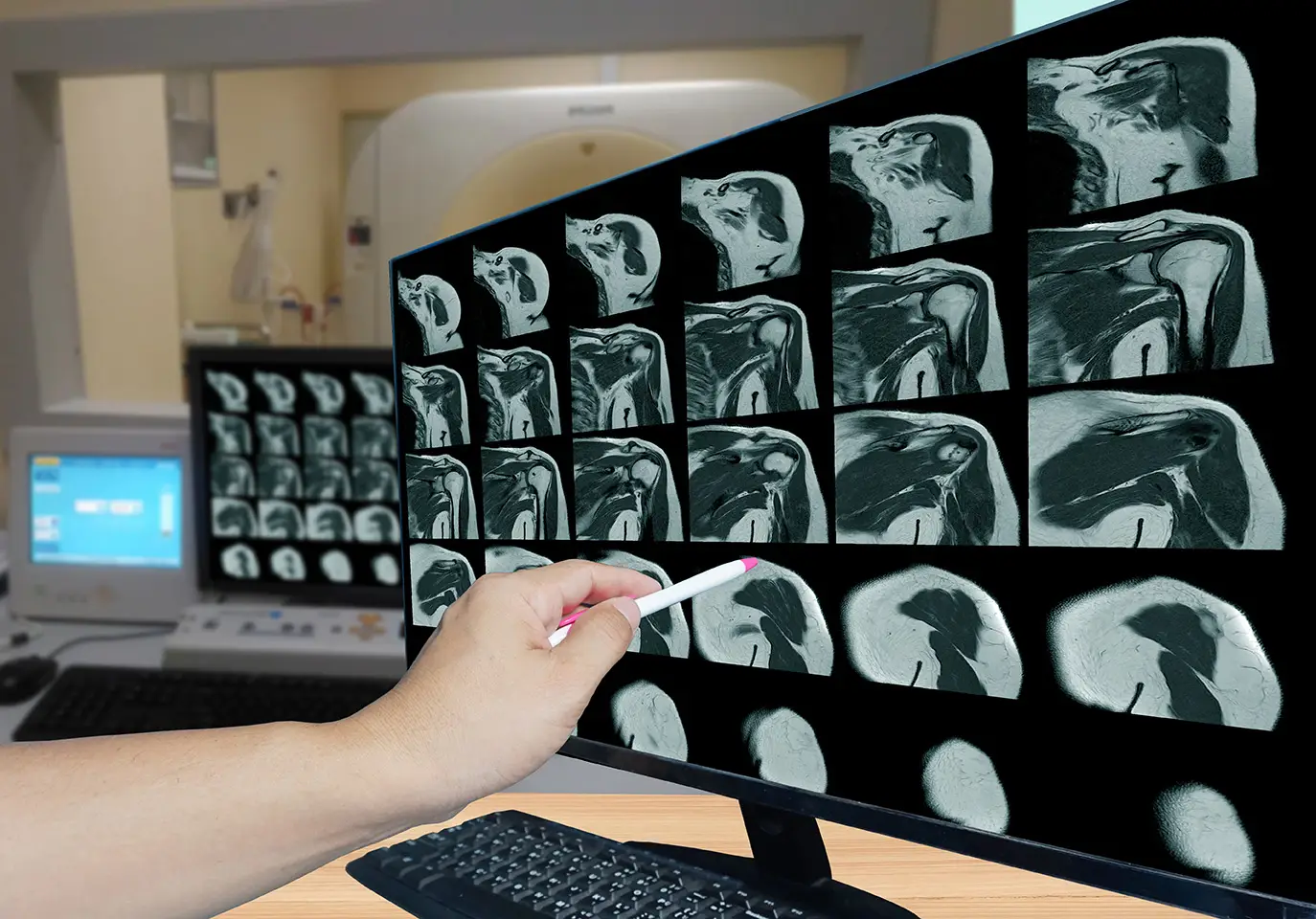
An MRI may sometimes provide additional information about spinal or soft-tissue conditions, although imaging does not automatically establish when an injury occurred. Our guide to using MRI evidence in a car accident injury claim explains why imaging should be evaluated as part of the entire medical timeline.
Do Not Exaggerate, but Do Not Minimize Your Symptoms Either
There are two bad extremes after a collision.
The first is exaggerating symptoms.
The second is minimizing everything because you do not want to complain.
Neither approach helps.
If you do not know whether you are injured, it is perfectly reasonable to say, “I’m not sure yet.”
If you feel sore but do not know how serious it is, say that.
If an adjuster asks whether you are completely recovered and you are still experiencing symptoms, do not automatically say you are “fine” simply because you are having a better day.
Accurate language creates a much clearer record.
Did Saying “I’m Fine” Ruin My Arizona Car Accident Claim?
Usually, no.
A single statement at the accident scene does not automatically erase injuries that become apparent hours or days later.
However, expect the insurance company to examine the statement if it believes doing so could reduce the value of your claim.
The best response is not to invent a better story. It is to document the real one.
When did symptoms begin? How did they progress? What did your doctors find? Did you follow medical recommendations? How did the injury affect your normal life?
Those details usually tell far more about an injury than two words spoken during the confusion immediately following a crash.
Talk With Perez Law Group About What You Said After the Accident
If you told police or an insurance adjuster that you were “fine” and later discovered that you were injured, do not assume you have lost your right to bring a claim.
Perez Law Group, PLLC represents people injured in car accidents throughout Glendale, Phoenix, the West Valley, and across Arizona.
Our attorneys can review what you told police and insurance companies, your medical records, the timing of your symptoms, diagnostic testing, accident evidence, insurance coverage, lost income, and other information relevant to your case.
Learn more about working with a Glendale car accident attorney at Perez Law Group or call (602) 730-7100 to schedule a consultation.

Cristina Perez Hesano
Founder & Managing Partner
Cristina Perez Hesano is the founding partner of Perez Law Group, PLLC, and an accomplished Arizona trial attorney with more than a decade of experience. She represents individuals and families in serious personal injury, wrongful death, bankruptcy, and consumer protection matters. Known for her compassion, strategic approach, and dedication to justice, Cristina has successfully secured significant results while helping clients navigate some of life’s most difficult challenges.