Can I Still Recover Compensation If I Was Hit Outside a Crosswalk?
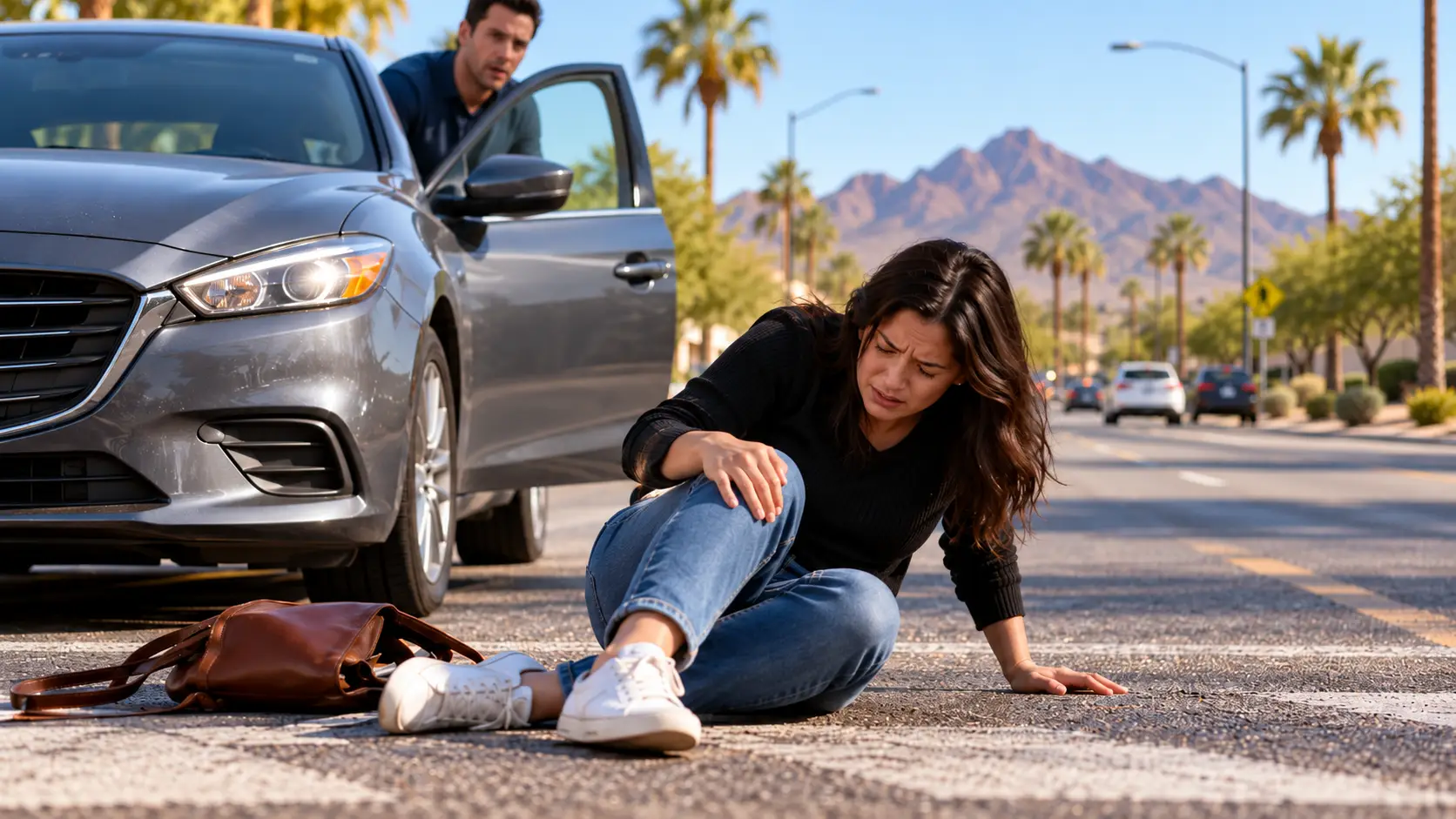
- Crossing outside a crosswalk does not automatically prevent compensation. Arizona law allows injured pedestrians to pursue claims when a driver’s negligence contributed to an accident.
- Drivers still have a responsibility to avoid hitting pedestrians. Speeding, distracted driving, and failing to maintain a proper lookout may contribute to liability.
- Your compensation may be reduced if you share responsibility. Arizona’s comparative negligence law generally allows recovery based on the other party’s percentage of fault.
- Evidence can make a significant difference. Surveillance video, witness statements, road conditions, and vehicle speed may help establish how the collision occurred.
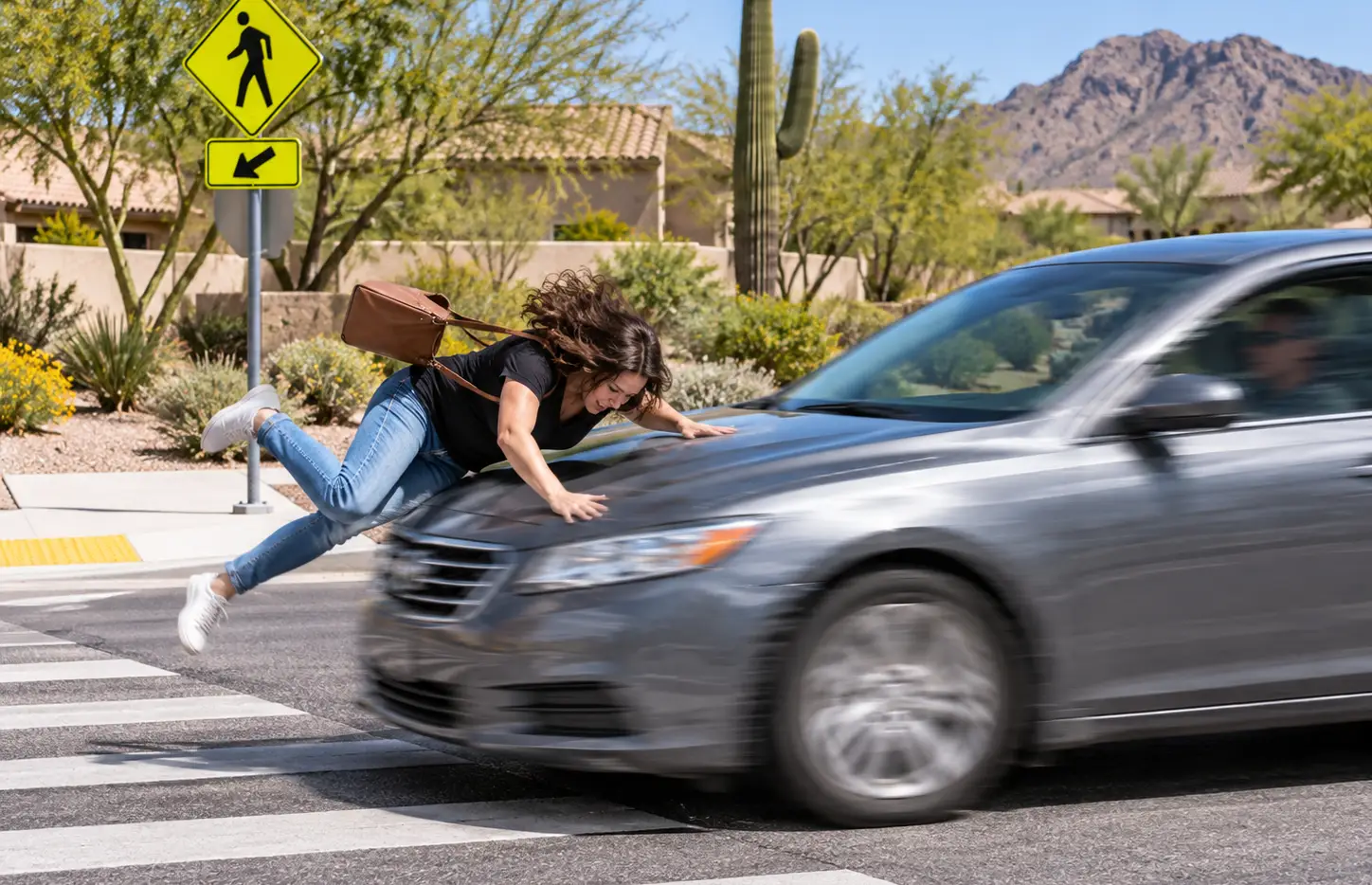
Yes, you may still be able to recover compensation if a vehicle hit you while you were crossing outside a crosswalk in Arizona. Although pedestrians must follow traffic laws, crossing outside a crosswalk does not automatically make you responsible for an accident or eliminate your right to pursue an injury claim.
Arizona follows a comparative negligence system, which means both the pedestrian and the driver may share responsibility for a collision. Even if you made a mistake while crossing the street, you could still receive compensation if the driver’s negligence contributed to your injuries.
At Perez Law Group, PLLC, we understand how quickly a pedestrian accident can turn someone’s life upside down. Before accepting an insurance company’s claim that you were at fault, it is important to understand what Arizona law actually says.
Is It Illegal to Cross Outside a Crosswalk in Arizona?
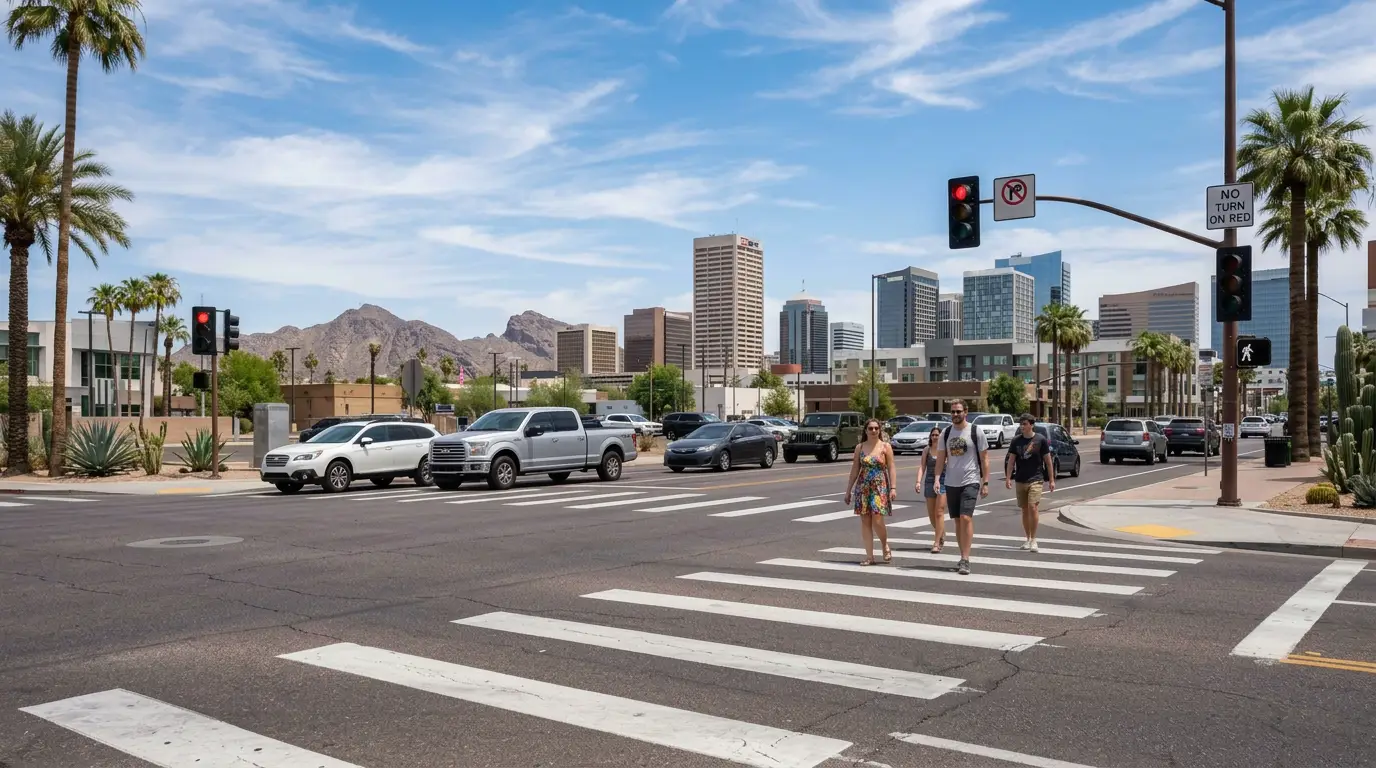
Many people assume that crossing a street anywhere other than a painted crosswalk is automatically illegal. Arizona law is more specific, and the location of the crossing matters.
Under Arizona Revised Statutes § 28-793, pedestrians crossing a roadway outside a marked crosswalk or an unmarked crosswalk at an intersection generally must yield the right-of-way to vehicles. The law also prohibits crossing outside a marked crosswalk between adjacent intersections where traffic control signals are operating.
However, not every street crossing requires a painted crosswalk. Arizona recognizes unmarked crosswalks at qualifying intersections, meaning pedestrians may have crosswalk protections even when there are no white lines painted on the road.
This distinction can become important after an accident. An insurance company might describe the collision as a jaywalking accident without investigating whether an unmarked crosswalk existed or whether the driver violated another traffic safety requirement.
Do Drivers Have to Stop for Pedestrians Outside Crosswalks?
A pedestrian’s responsibility to yield does not mean a driver has permission to hit someone in the roadway. Arizona law requires drivers to exercise reasonable care to avoid collisions with pedestrians, regardless of whether the person is inside a designated crosswalk.
Under Arizona Revised Statutes § 28-794, drivers must exercise due care to avoid striking pedestrians, sound their horn when necessary, and take special precautions when observing children or confused or incapacitated individuals.
A driver may therefore be negligent if they were texting, driving too fast for conditions, or failing to pay attention to someone who was visibly crossing the street. Even traveling at the posted speed limit does not necessarily establish that a driver was operating safely under the circumstances.
Arizona’s reasonable and prudent speed law, § 28-701, also requires motorists to consider existing hazards, including pedestrians. The important question is not simply where the pedestrian crossed, but whether the driver took reasonable steps to avoid a foreseeable collision.
How Does Comparative Negligence Affect a Pedestrian Accident Claim?
Arizona uses a comparative negligence system that allows responsibility for an accident to be divided among the people whose actions contributed to it. Under Arizona Revised Statutes § 12-2505, an injured person’s compensation is generally reduced according to their percentage of fault.
Imagine you were crossing a Glendale street outside a marked crosswalk when a speeding driver struck you. An investigation determines that you should have yielded to traffic, but the driver was also traveling too fast and failed to react appropriately.
Suppose your total damages were valued at $100,000 and you were found 30% responsible for the collision. Your potential damages award could be reduced to $70,000, subject to other legal considerations and the available sources of recovery.
This is only a hypothetical example, not an actual Perez Law Group case result. The outcome of a real claim depends on the evidence, the parties’ respective fault, insurance coverage, and other circumstances.
The important point is that being partially responsible does not automatically mean you lose your entire claim. However, when the evidence establishes that a driver’s negligence did not contribute to the collision, recovery against that driver may not be available.
What If the Driver Says I Walked Directly Into Traffic?
One of the most common defenses in pedestrian accident cases is that the pedestrian entered the roadway unexpectedly. An insurance adjuster may argue that the driver had no reasonable opportunity to stop, particularly if the pedestrian crossed between parked vehicles or stepped into moving traffic.
Sometimes that argument is supported by the evidence, but it should not be accepted without investigation. Investigators may need to determine how long the pedestrian was visible, the driver’s actual speed, whether braking occurred, and whether the driver was distracted.
Consider two different situations involving pedestrians crossing outside marked crosswalks. A person who suddenly runs directly in front of a vehicle moving at a reasonable speed presents a very different liability question from someone who is visible in the roadway for several seconds while an approaching driver looks at a phone.
At Perez Law Group, we believe the circumstances surrounding a collision deserve careful investigation rather than assumptions based solely on the pedestrian’s location. Our Arizona pedestrian injury attorneys can evaluate evidence of driver negligence and how comparative fault may affect a claim.
What Evidence Can Help Prove the Driver Was Negligent?
When a collision occurs outside a crosswalk, the evidence explaining what happened before impact can be especially important. The insurance company may focus on where the pedestrian crossed, while other evidence could reveal unsafe driving behavior that contributed to the accident.
Surveillance footage from nearby businesses, traffic cameras, dashcams, and witnesses may help establish the sequence of events. Photographs of the roadway, lighting conditions, sight obstructions, traffic signs, and the location of nearby intersections can also provide important context.
Vehicle damage, skid marks, electronic vehicle data when available, and accident reconstruction analysis may help establish the vehicle’s speed and the driver’s opportunity to react. Medical records are equally important because they help connect the collision to the injuries and document their seriousness.
Evidence should be preserved as quickly as possible because security recordings may be overwritten and road conditions can change. Our guide on what pedestrians should do after an auto accident explains additional steps that may help protect an injury claim.
Can I Still File a Claim If the Police Blamed Me?
Yes, a police officer’s conclusion that you contributed to the accident does not automatically prevent you from pursuing a personal injury claim. A traffic citation or accident report may be significant evidence, but it does not necessarily establish the final allocation of fault in a civil case.
Police officers sometimes arrive after a collision and must reconstruct events using the information available at the scene. Additional surveillance video, witness accounts, and expert analysis may reveal details that were not available when the original report was prepared.
If you received a citation for crossing improperly, do not ignore it or assume that your personal injury claim is over. An attorney can evaluate the citation separately from the civil liability questions and explain how the available evidence may affect your options.
What Compensation Can I Recover After Being Hit by a Car?
Pedestrian accidents can cause severe injuries because people on foot have little protection against the impact of a motor vehicle. Broken bones, traumatic brain injuries, spinal injuries, and permanent mobility limitations may require extensive treatment and affect someone’s ability to work or enjoy everyday activities.
Depending on the circumstances, an injured pedestrian may seek compensation for emergency medical care, hospitalization, surgery, rehabilitation, future medical expenses, lost income, reduced earning capacity, pain and suffering, emotional distress, and permanent disability. The value of a claim depends on both the severity of the losses and the evidence establishing legal responsibility.
It is also important to understand that the driver’s liability insurance may not pay medical bills as treatment occurs. Health insurance, applicable Medical Payments coverage, or other arrangements may help while the claim is being evaluated, as explained in our guide to filing an insurance claim for accident-related medical bills.
What If the Driver Was Uninsured or Left the Scene?
Being struck by an uninsured driver or someone who leaves the accident scene can make an already stressful situation more complicated. However, a lack of liability insurance does not always mean there are no potential sources of compensation.
Depending on the policy terms and circumstances, an injured pedestrian may qualify for uninsured or underinsured motorist benefits through their own automobile insurance or another applicable policy. These benefits may be available even though the injured person was walking rather than driving.
Our article about who pays after an Arizona hit-and-run pedestrian accident explains how insurance coverage may apply when the responsible driver cannot be identified. Reviewing all potentially applicable policies can be an important part of evaluating the claim.
How Long Do I Have to File a Pedestrian Accident Claim in Arizona?
Under Arizona Revised Statutes § 12-542, many personal injury lawsuits must be filed within two years after the cause of action accrues. However, some cases have different deadlines, and waiting too long may affect your ability to recover compensation.
For example, claims against certain government entities or employees generally require a formal notice of claim within 180 days and are subject to a one-year lawsuit deadline, with specific exceptions and procedural requirements. These shorter deadlines can become relevant when a government vehicle or potentially dangerous public roadway condition is involved.
Even when the standard two-year period applies, investigating early can help preserve important evidence. Speaking with an attorney promptly can help identify the applicable deadlines and determine whether further investigation is necessary.
Talk to an Arizona Pedestrian Accident Lawyer Before Assuming You Have No Case
If you were hit by a car while crossing outside a crosswalk, do not assume you are automatically responsible for everything that happened. Arizona law recognizes that pedestrians and drivers can share responsibility, and negligent driving may still create grounds for compensation.
At Perez Law Group, PLLC, our pedestrian accident attorneys help injured people throughout Glendale, Phoenix, Peoria, and communities across Arizona understand their legal options. We can review the accident circumstances, evaluate available evidence, investigate potential insurance coverage, and explain how Arizona’s comparative negligence rules may apply.
Call Perez Law Group at (602) 730-7100 or contact our legal team online to schedule a free personal injury consultation. Hablamos Español, and we are here to help you understand your rights and make informed decisions about your next steps.
This article provides general information about Arizona law and is not legal advice. Every accident is different, and the outcome of a claim depends on its specific facts and evidence.

Cristina Perez Hesano
Founder & Managing Partner
Cristina Perez Hesano is the founding partner of Perez Law Group, PLLC, and an accomplished Arizona trial attorney with more than a decade of experience. She represents individuals and families in serious personal injury, wrongful death, bankruptcy, and consumer protection matters. Known for her compassion, strategic approach, and dedication to justice, Cristina has successfully secured significant results while helping clients navigate some of life’s most difficult challenges.