What Happens If You Are a Passenger in a Car Accident?

Car accidents are stressful, no matter your role—but being a passenger can feel especially overwhelming. You weren’t driving. You had no control over what happened. And now, you’re left wondering: What are your rights? Who pays for your injuries? What should you do next?
If you were injured as a passenger in a car accident, here’s what you need to know.
1. You Have the Right to File a Claim
As a passenger, you’re almost never considered at fault. That means you have the legal right to seek compensation for your injuries—usually through one of the drivers’ insurance policies.
Depending on the circumstances of the crash, you may be able to file a claim against:
- The driver of the car you were riding in (if they caused the crash)
- The other driver (if they were at fault)
- Both drivers (if they share blame)
In Arizona and many other states, fault is based on a percentage system. So, if both drivers were partially at fault, each insurance company may cover a portion of your claim.
2. What Damages Can You Recover?
Passengers injured in an accident may be eligible to recover compensation for:
- Medical bills (current and future)
- Lost wages if you missed work
- Pain and suffering
- Emotional distress
- Long-term rehabilitation or disability
If you’ve suffered serious injuries, these costs can add up quickly. That’s why it’s important to act quickly and speak with a personal injury attorney.
3. Who Pays for Your Injuries?
In most cases, your compensation will come from one or more insurance policies. These may include:
Auto Insurance (Liability Coverage):
The at-fault driver’s insurance is typically the first source of compensation.
Medical Payments Coverage (MedPay):
If the car you were riding in had MedPay, it may cover some of your initial medical costs, regardless of who was at fault.
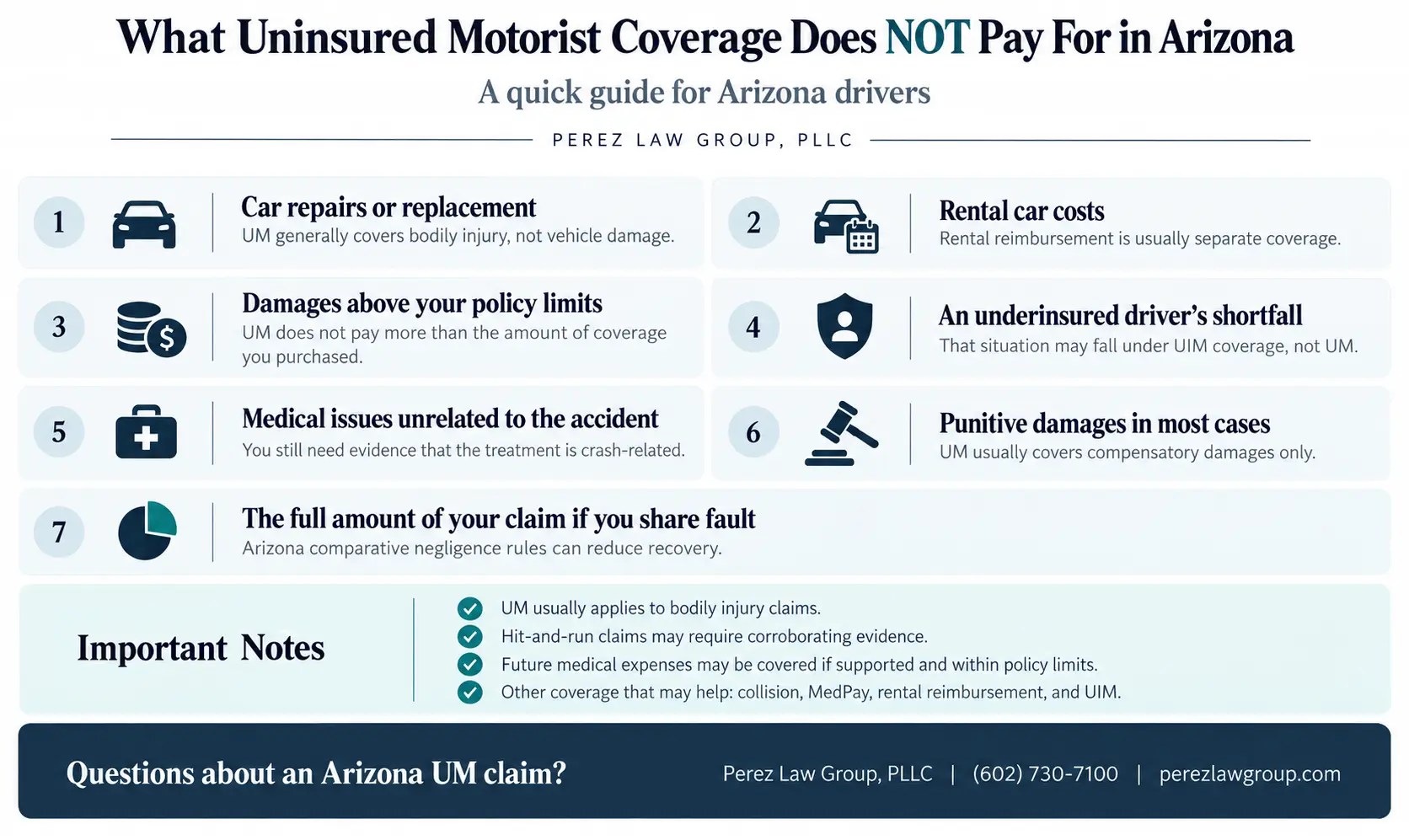
Uninsured/Underinsured Motorist Coverage:
If the at-fault driver doesn’t have insurance—or doesn’t have enough—you might be covered under your own (or the vehicle owner’s) UM/UIM policy.
4. What Should You Do After the Crash?
Here are a few steps to protect your health and your rights:
- Seek Medical Attention: Even if you feel okay, get checked out. Some injuries (like whiplash or internal trauma) may not show symptoms right away.
- Gather Information: Get contact and insurance info from both drivers. If there are witnesses, ask for their contact details too.
- Document Everything: Take photos of the accident scene, your injuries, and any property damage.
- Don’t Talk to Insurance Adjusters Alone: Insurance companies may try to minimize your claim. It’s best to speak with a lawyer before giving any recorded statements.
- Talk to a Personal Injury Lawyer: An experienced attorney can help you understand your options and maximize your compensation.
5. What If You’re Related to the Driver?
In some cases, insurance coverage may not apply if you’re closely related to the driver (like a spouse or child) and live in the same household. This can be a tricky area of law, and a personal injury lawyer can help clarify your rights.
Final Thoughts
Being injured as a passenger in a car accident puts you in a vulnerable position—but you have rights, and you may be entitled to full compensation for your injuries and suffering. Don’t wait. Insurance companies are quick to protect their bottom line. Make sure someone is protecting you, too.
Have questions about a passenger injury claim?
Our experienced car accident attorneys are here to help. Contact us today for a free consultation and find out what your claim may be worth.
You’re Not Alone – Our Injury Lawyers are Here for You!
Every personal injury lawyer at Perez Law Group, PLLC is dedicated to giving each case personalized attention, knowing that your injuries have changed your life. You do not have to struggle alone. Call us today to start working together toward healing! (602) 730-7100 or (888) 59PEREZ

Cristina Perez Hesano
Founder & Managing Partner
Cristina Perez Hesano is the founding partner of Perez Law Group, PLLC, and an accomplished Arizona trial attorney with more than a decade of experience. She represents individuals and families in serious personal injury, wrongful death, bankruptcy, and consumer protection matters. Known for her compassion, strategic approach, and dedication to justice, Cristina has successfully secured significant results while helping clients navigate some of life’s most difficult challenges.