How Do You Prove Constructive Knowledge of a Hazard in a Personal Injury Case?
- What Is Constructive Knowledge?
- Constructive Knowledge vs. Actual Knowledge
- Evidence That Helps Prove Constructive Knowledge
- How Long Must a Hazard Exist?
- Where Does Constructive Knowledge Most Often Come Into Play?
- Insurance Companies Often Challenge Notice
- What Should You Do After a Slip and Fall?
- Perez Law Group Can Help Build Your Case

Every day, people are injured because dangerous conditions on someone else’s property go unnoticed or are ignored. Whether you slipped on a wet grocery store floor, tripped over broken pavement, or were injured by another hazardous condition, proving that a property owner was negligent is one of the most important parts of a successful premises liability claim. Understanding how negligence is established can significantly affect your ability to recover compensation for medical bills, lost wages, and other damages.
If you’ve been injured, it’s important to understand your legal rights. Our Arizona Premises Liability Lawyers help victims hold negligent property owners accountable, while our Personal Injury Attorneys investigate the evidence needed to build strong claims. If your accident involved a fall, you may also find our guide on What to Do After a Slip and Fall Accident helpful for protecting your case from the very beginning.
One of the key legal concepts in many premises liability cases is constructive knowledge. Even if a property owner claims they were unaware of a dangerous condition, they may still be legally responsible if they should have discovered and corrected the hazard through reasonable inspections. In this article, we’ll explain what constructive knowledge means, the types of evidence that can establish it, and how an experienced attorney can use that evidence to prove liability.
What Is Constructive Knowledge?
Constructive knowledge means a property owner did not necessarily know about a dangerous condition, but a reasonable owner exercising ordinary care would have discovered and corrected it before someone was injured.
Arizona law generally requires property owners to maintain reasonably safe premises for lawful visitors. If a dangerous condition existed long enough that reasonable inspections would have discovered it, the owner may still be held responsible.
Examples include:
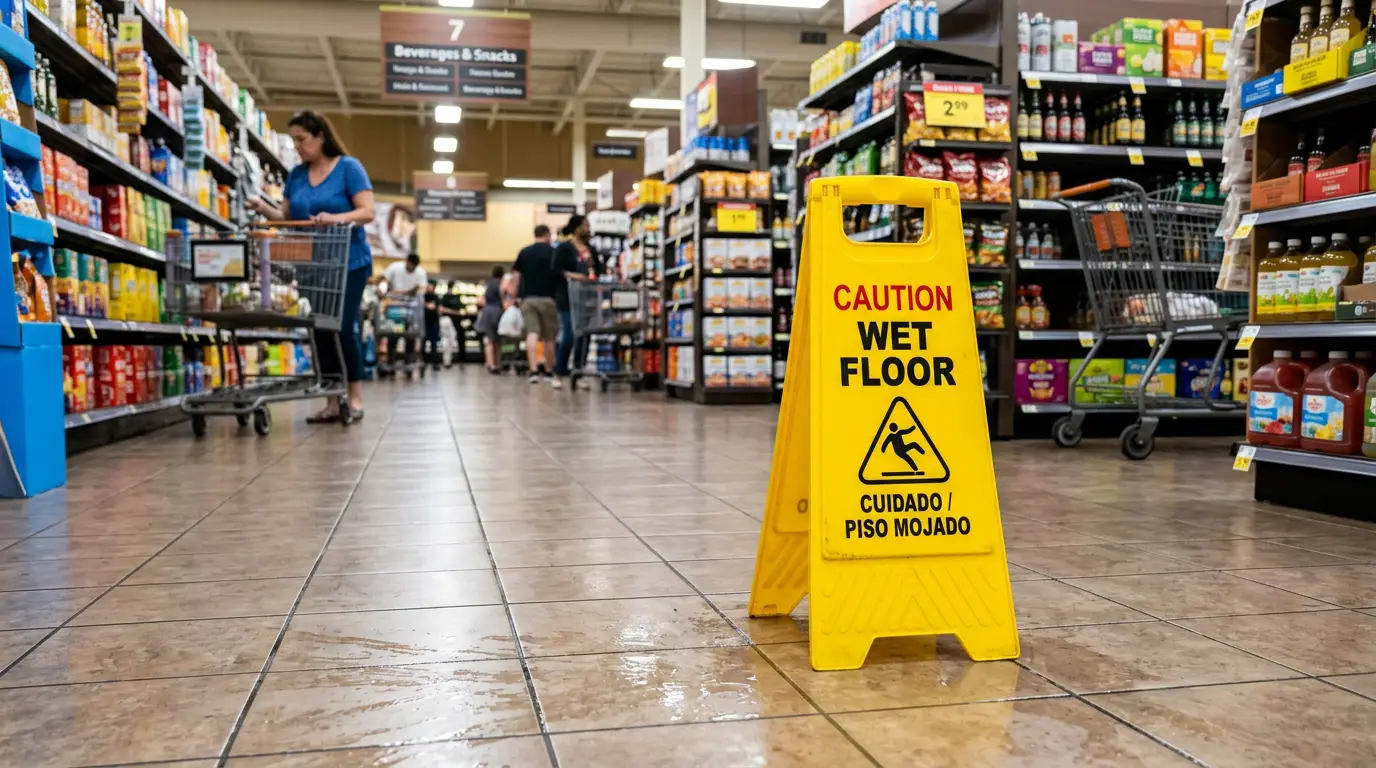
- A grocery store spill left unattended for over an hour
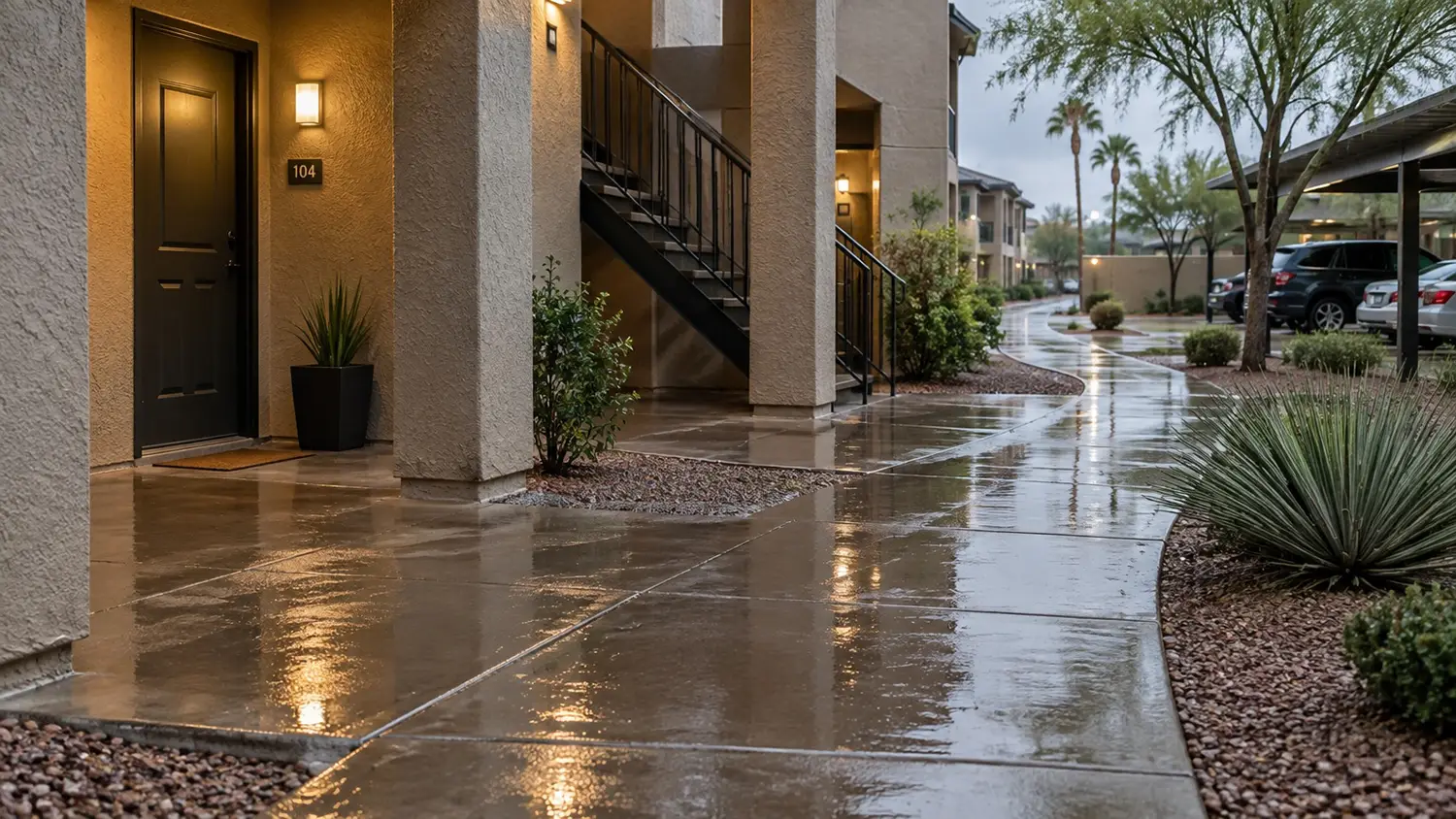
- Broken stairs that had been deteriorating for weeks
- A loose handrail reported by multiple tenants
- Uneven pavement that had existed for months
- Poor lighting that remained unrepaired despite repeated complaints
The question becomes:
Would a reasonably careful property owner have discovered and fixed this hazard?
Constructive Knowledge vs. Actual Knowledge
These two legal concepts are different.
Actual knowledge means the owner actually knew about the hazard.
Examples include:
- An employee reports the spill to management.
- Security footage shows employees walking around the hazard.
- Customers complained before the accident.
Constructive knowledge means the owner should have known because the hazard existed long enough or occurred often enough that reasonable inspections would have found it.
Many successful premises liability cases rely on constructive knowledge rather than actual notice.
Evidence That Helps Prove Constructive Knowledge
There is rarely one piece of evidence that proves constructive knowledge. Instead, successful premises liability cases are usually built by connecting several facts that demonstrate the property owner should have discovered and corrected the hazard before someone was hurt.
One of the strongest forms of evidence is surveillance video. Security footage can show how long the dangerous condition existed, whether employees walked past it without taking action, or whether inspections were skipped altogether. Because many businesses automatically erase video after only a few days, obtaining this evidence quickly is often essential.
Maintenance records can also tell an important story. Inspection logs, repair requests, and work orders may reveal that a known problem was ignored or that routine safety inspections were not performed as required.
In some cases, previous incident reports help establish that the hazard was not an isolated event. If other customers or tenants had already complained or been injured in the same location, it becomes much more difficult for a property owner to argue they had no reason to know about the danger.
Witnesses can provide valuable insight as well. Employees may testify that management delayed repairs or failed to address repeated complaints, while customers may confirm the hazard had been present long before the accident occurred.
Finally, photographs taken immediately after the accident often reveal signs that the dangerous condition had existed for some time. Footprints through a liquid spill, rust on broken equipment, or weathered cracks in a sidewalk may all support an argument that the property owner should have discovered the hazard.
How Long Must a Hazard Exist?
There is no fixed amount of time.
Instead, Arizona courts examine factors such as:
- The type of hazard
- The location
- How frequently inspections should occur
- Industry safety standards
- Whether the condition was temporary or permanent
For example, a grocery store aisle may require inspections every few minutes, while apartment staircases should receive regular maintenance and repairs over time.
Every case depends on its specific facts.
Where Does Constructive Knowledge Most Often Come Into Play?
Constructive knowledge is a common issue in premises liability claims involving grocery stores, shopping centers, apartment complexes, hotels, restaurants, office buildings, and parking lots. It also arises in cases involving broken sidewalks, loose handrails, poor lighting, falling merchandise, and other hazards that develop over time. Although every case is different, the central question remains the same: should a reasonably careful property owner have discovered and corrected the dangerous condition before someone was injured?
Insurance Companies Often Challenge Notice
Insurance companies frequently argue:
- The hazard appeared moments before the accident.
- No employee knew about it.
- The property owner had no opportunity to fix it.
- The injured person caused the accident.
These arguments are common because proving notice is one of the central elements of a premises liability claim.
An experienced attorney knows how to gather surveillance footage, maintenance records, inspection logs, and witness testimony before this evidence disappears.
What Should You Do After a Slip and Fall?
If you believe a dangerous condition caused your injuries:
- Report the accident immediately.
- Photograph the hazard before it changes.
- Obtain witness contact information.
- Seek medical treatment promptly.
- Avoid giving recorded statements to the insurance company.
- Contact an experienced Arizona personal injury attorney as soon as possible.
The sooner an investigation begins, the greater the chance of preserving critical evidence.
Perez Law Group Can Help Build Your Case
Constructive knowledge is rarely proven with one piece of evidence. Instead, successful cases often rely on a combination of surveillance footage, maintenance records, witness testimony, photographs, and careful investigation.
At Perez Law Group, we know how to uncover evidence that property owners and insurance companies may hope goes unnoticed. Our team thoroughly investigates every premises liability case to determine whether negligence contributed to your injuries.
If you were hurt because of a dangerous condition on someone else’s property, contact Perez Law Group today for a free consultation. We will review your case, explain your legal options, and fight to pursue the compensation you deserve.
Call Perez Law Group at (602) 730-7100 to schedule your FREE consultation.

Cristina Perez Hesano
Founder & Managing Partner
Cristina Perez Hesano is the founding partner of Perez Law Group, PLLC, and an accomplished Arizona trial attorney with more than a decade of experience. She represents individuals and families in serious personal injury, wrongful death, bankruptcy, and consumer protection matters. Known for her compassion, strategic approach, and dedication to justice, Cristina has successfully secured significant results while helping clients navigate some of life’s most difficult challenges.